
DUI Field Sobriety Tests in California
When you have been arrested for DUI, you may have been given a field sobriety test by the law enforcement officer on the scene.
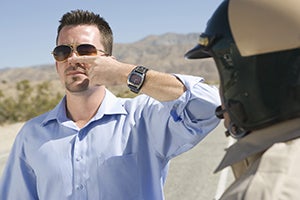
The results of those tests can vary significantly. It's crucial to understand that this is a pivotal part of our investigation, and it should not be left to guesswork.
You must have any field sobriety tests assessed by an experienced DUI lawyer, who will provide you with the necessary support and guidance, ensuring you are not alone in this process.
Although various tests are administered as field sobriety tests, only three are considered “standard.” The horizontal Gaze Nystagmus (HGN) is a medical term indicating an involuntary jerking movement of the eyes.
The officer will have you follow a moving object, such as a finger or a pen, to see if your eyes follow smoothly or if there is an increase in movement of the eyeballs due to the influence of drugs or alcohol.
Nystagmus is a natural process even when sober, but eye movements are often exaggerated when under the influence. It should be noted that many other factors could cause nystagmus, such as consuming caffeine or even fatigue.
Various DUI Tests
In the walk-and-turn, the officer will have you take nine steps heel-to-toe and then turn around and walk back in the same fashion. During this procedure, the officer will assess the need for balance. The goal is to test whether you can divide your attention between listening to instructions and performing the test.
Police will judge your performance based on your ability to follow instructions and maintain your balance during instructions.
In a one-legged stand, the officer will ask you to hold one foot off the ground and maintain balance smoothly.
Police will probably ask you to count out loud to see how well you gauge time. They are looking for signs of impairment, such as swaying, using arms to keep balance, or putting food on the ground.
Flawed Subjective Nature
Even though these tests are considered “standard,” it's important to remember that they are flawed due to their subjective nature. A police officer's opinion can be influenced, and it's possible that the tests were not conducted exactly according to protocol.

Being aware of these potential challenges is key to understanding the process, making you a more informed participant in your legal proceedings.
Additionally, you should know that these tests are not mandatory, and you do not have to submit them per California law.
However, refusing to take these tests can lead to other consequences, such as the officer's suspicion increasing or the possibility of being arrested.
It's possible to pass DUI field sobriety tests, but it will depend on many factors. There is no penalty for refusing a PAS breath test unless you are under 21 or on probation for a prior DUI conviction. Knowing your rights can empower you in this situation.
Notably, under the California and United States Constitutions, DUI checkpoints are legal and have been confirmed and validated by numerous court cases as long as they meet specific standards.
Failing to Complete Field Sobriety Tests
Police will use a failure to complete these flown sobriety tests as a sign of alcohol or drug consumption.
Clearly, all these tests are subjective in the eyes of the police officer. Their arrest report will be written to make it sound like you were driving under the influence.

Police are typically looking for a reason to fail your performance on the FSTs, which could lead to serious legal consequences, including a suspended license, hefty fines, and even jail time.
There are events during the performing of field sobriety tests that will impact your ability to complete them.
For example, they are often performed at night when the weather may be cold, and you could be tired.
Also, the tests are performed on uneven ground or loose rocks. Also, you may be wearing shoes that make it difficult to perform the tests.
Challenging Tests in Court
It's important to understand that not all of these field sobriety tests are 100% accurate, and the conditions under which they were administered could be challenged in court. This knowledge empowers you to question the validity of these tests and defend your rights.
As a driver, you have the right to challenge the method in which the tests were administered. An experienced criminal defense lawyer could question the officer's training in administering the tests or the conditions under which the tests were conducted.
In many DUI cases, police will testify that the driver failed some of the tests, but not all of them. This knowledge can give you confidence in your legal position.
Next Steps in Your DUI Defense
Even if you have submitted to a field sobriety test, this doesn't necessarily mean the results of the test can be used against you in court.
Contact us at Cron, Israels & Stark and have an experienced DUI lawyer review the facts of your case, including any administered field sobriety tests.

These tests can be challenged, as can the fact that the officer must have had “reasonable suspicion” as to why they pulled you over in the first place.
This means the officer must have observed specific, articulable facts that would lead a reasonable person to believe that you were driving under the influence.
For example, swerving between lanes or running a red light could provide the necessary reasonable suspicion for a DUI stop.
We have extensive experience and know-how to defend you effectively. If you have been arrested for drunk driving based on a field sobriety test, we urge you to give us a call to review the details and start building your defense.
A dry reckless is one of the most advantageous plea reductions in California DUI cases.
Remember, the sooner you seek legal help, the better your chances of a favorable outcome. Early intervention can help preserve evidence, protect your rights, and increase the likelihood of a successful defense. Taking this proactive step can make a significant difference in your case.