
Health and Safety Code 11383 HS: Possession of Materials for Manufacturing PCP
If you or a loved one is accused under California Health and Safety Code 11383 HS, it involves a serious felony.
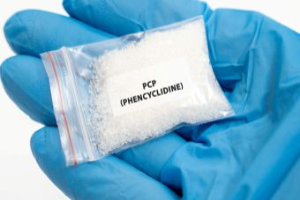
California prosecutors regard the illegal manufacturing of controlled substances—particularly Phencyclidine (PCP)—as a very serious offense.
This comprehensive guide breaks down the legal definition of HS 11383, the penalties you could face, common legal defenses, and how a skilled criminal defense attorney can help you fight these charges.
If you're facing drug charges, the best chance for a favorable outcome is to consult an experienced California criminal defense attorney at Cron, Israels & Stark.
To schedule a consultation, call (424) 372-3112 or fill out the contact form here.
What is California Health and Safety Code 11383 HS?
Under Health and Safety Code 11383 HS, it is illegal to possess specific precursor chemicals with the intent to manufacture PCP or any of its analogs.
Unlike a typical drug possession charge, the prosecution doesn't have to prove you possessed finished PCP. They only need to show you had the raw materials to make it and that your main intent was chemical production.
Legal Elements of the Crime
To establish a conviction for violating HS 11383, the prosecution must demonstrate all three elements beyond a reasonable doubt:
-
Possession: You had physical possession or control of the specified precursor chemicals (constructive possession).
-
Specific Chemicals: The materials involved were precursors used in the synthesis of PCP, including piperidine and cyclohexanone.
-
Intent to Manufacture: You had these chemicals with the clear intent to use them to produce PCP.
Example: Conviction via Circumstantial Evidence (Constructive Possession)
The Scenario:
Police carry out a valid search warrant on a detached garage rented by David. During the search, law enforcement uncovers commercial-grade containers of piperidine and cyclohexanone, which are the primary chemical precursors used to make PCP. They also discover glassware, gas masks, and handwritten notes with chemical ratios, but no finished PCP is present on the property.
Why it falls under HS 11383:
Although David was not caught in the act of cooking drugs, the state can still secure a conviction. He had constructive possession of the specific precursor combinations as defined by the law. The presence of specialized lab equipment and chemical recipes offers circumstantial evidence supporting his specific intent to manufacture PCP.
Penalties and Sentencing for HS 11383
A violation of Health and Safety Code 11383 HS is a permanent felony in California. It cannot be reduced to a misdemeanor because it is not a "wobbler."
If convicted, the penalties can be severe and significantly change one's life.
-
Prison Time: 2, 4, or 6 years in California State Prison.
-
Monetary Fines: Up to $10,000.
-
Formal Probation: Felony probation may be granted in some cases, which includes strict oversight and compliance terms.
Aggravating Factors
Your sentence can be considerably increased if specific aggravating factors are present, such as:
-
Manufacturing activity is located close to a school, playground, or daycare center.
-
Involving a minor under the age of 18 in the operation.
-
The presence of significant amounts of precursors indicates a large-scale laboratory.
Common Legal Defenses to Fight the Charges
Facing an HS 11383 charge can be daunting, but being arrested for a felony doesn't mean you're guilty. A skilled California criminal defense lawyer can employ a range of effective legal tactics to challenge the prosecution's case.
1. Lack of Intent
The core aspect of an HS 11383 charge is the intention to produce. If your lawyer can prove that you had the chemicals for a lawful reason—such as scientific research, commercial manufacturing, or approved agricultural activities—the charges will not hold.
2. Illegal Search and Seizure
Many drug manufacturing investigations rely on search warrants or unexpected police raids. If law enforcement conducted a search without a proper warrant, exceeded the warrant's scope, or lacked probable cause, the evidence they gathered might be excluded and cannot be used in court.
3. Lack of Possession or Knowledge
To be convicted, you need to be aware that the chemicals were present and understand their nature. If the materials belonged to a roommate, a co-worker, or were left on your property without your knowledge, you do not legally possess them.
4. Mistaken Identity or False Accusations
It is common for informants to falsely implicate individuals to secure a plea deal for their own crimes.
Related Offenses
If charged with HS 11383, you might also encounter related drug charges under the California Health and Safety Code.
|
Code Section |
Offense |
Description |
| HS 11379.6 | Manufacturing a Controlled Substance | Actually engaging in the chemical synthesis or production of PCP or other drugs. |
| HS 11377 | Possession of a Controlled Substance | Possessing a finished PCP for personal use. |
| HS 11378 | Possession for Sale | Possessing finished PCP with the intent to sell it. |
Frequently Asked Questions (FAQs)
Can I get drug diversion (like PC 1000) for an HS 11383 charge?
Generally, no. Drug diversion programs such as Penal Code 1000 or Proposition 36 are intended for non-violent, simple possession cases. Since HS 11383 involves intent to manufacture drugs, it is classified as a commercial or sales-related offense and usually does not qualify for standard diversion programs.
What are the specific precursor chemicals listed under HS 11383?
The law specifically targets chemical mixes used in PCP synthesis. Common combinations involve piperidine and cyclohexanone, or pyrrolidine and cyclohexanone. Courts often view possessing these combinations simultaneously as strong circumstantial evidence of intent.
Is "constructive possession" enough for a conviction?
Yes. Constructive possession indicates that although you did not physically hold the chemicals, you exercised control over where they were located, such as in your garage, a rented storage unit, or your vehicle. The prosecution can use this to establish their case.
What should I do if the police want to question me about a chemical delivery?
Do not answer any questions unless a lawyer is present. Invoke your Fifth Amendment right to remain silent. Clearly and politely tell the officers that you want to consult with an attorney before making any statements.
Speak with a California Criminal Defense Attorney Today
A conviction under California Health and Safety Code 11383 HS can lead to lengthy imprisonment and a permanent felony record, which can harm your employment opportunities. If you are under investigation or have already been arrested, acting quickly is crucial.
Contact a qualified criminal defense attorney now to review your case details, safeguard your constitutional rights, and develop a strong defense strategy.
The criminal defense lawyers at Cron, Israels & Stark, based in Los Angeles, are ready to assist you. Book your consultation now.