
What Qualifies as Criminal Negligence in California?
In California criminal law, criminal negligence refers to conduct that goes far beyond ordinary carelessness or a simple mistake.
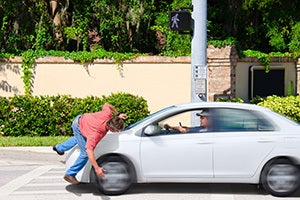
It describes behavior so reckless and dangerous that it shows a disregard for human life or safety.
When prosecutors allege criminal negligence, the consequences can be serious, including jail or prison time, fines, and a long-term criminal record.
Understanding how California defines criminal negligence—and how it differs from ordinary negligence—is critical if you are under investigation or charged with a crime involving this legal standard.
Your best hope for a favorable outcome is with a highly experienced criminal defense attorney at Cron, Israels & Stark. To schedule a consultation, call (424) 372-3112 or contact us here.
What Is Criminal Negligence Under California Law?
Criminal negligence occurs when a person:
-
Acts in a way that creates a high risk of death or great bodily injury, and
-
Does so with a gross departure from how an ordinary, reasonable person would act in the same situation.
It is not necessary that someone actually be injured. Criminal negligence focuses on the dangerous nature of the conduct itself, not just the outcome.
California courts often describe criminal negligence as a form of recklessness, where a person ignores an obvious risk or fails to consider the safety of others.
Legal Standard for Criminal Negligence in California
To prove criminal negligence, a prosecutor must establish all of the following:
-
Reckless Conduct: The defendant engaged in conduct that created a substantial risk of serious injury or death.
-
Disregard for Human Life: The conduct demonstrated indifference to the safety or lives of others.
-
Objective Awareness: A reasonable person in the same situation would have known the conduct was dangerous.
Importantly, criminal negligence may exist even if no one is hurt, as long as the behavior was likely to cause serious harm.
How Criminal Negligence Differs From a Mistake or Accident
Criminal negligence requires more than:
-
Poor judgment
-
Simple carelessness
-
An isolated mistake
-
An unavoidable accident
Instead, it applies only when conduct is outrageously reckless and clearly outside the bounds of reasonable behavior.
Examples of Criminal Negligence
Examples that may support a finding of criminal negligence include:
-
Leaving a young child locked inside a car during extreme heat
-
Driving at excessive speeds through a crowded residential neighborhood
-
Handling a loaded firearm recklessly in the presence of others
-
Failing to provide basic care to a dependent child or elderly person
Criminal negligence often arises in cases involving serious injury or death, but it is the risk created, not the result, that matters most.
Crimes That Commonly Involve Criminal Negligence
Criminal negligence is not a crime by itself, but rather an essential element of certain criminal offenses. Common examples include:
Involuntary Manslaughter – Penal Code 192(b)
A person may be charged when they unintentionally kill someone through criminally negligent conduct.
Vehicular Manslaughter – Penal Code 192(c)
Traffic-related deaths often hinge on whether the driver acted with criminal negligence, such as excessive speeding or distracted driving.
Child Endangerment – Penal Code 273a
Placing a child in a situation likely to cause serious harm may constitute criminal negligence even if no injury occurs.
Elder Abuse – Penal Code 368
Failing to provide care or protection to an elderly person under one's care can lead to criminal charges for negligent conduct.
Criminal Negligence vs. Civil Negligence
While both civil and criminal negligence involve unsafe behavior, they are fundamentally different:
Civil Negligence
-
Handled in personal injury lawsuits
-
Focuses on financial compensation
-
Proven by a “preponderance of the evidence”
-
Does not result in jail or prison
Criminal Negligence
-
Prosecuted by the state
-
May result in incarceration, fines, or probation
-
Requires proof beyond a reasonable doubt
-
Involves reckless disregard for human life
Key Facts About Criminal Negligence
-
Substitute for Intent: Prosecutors do not need to prove you intended harm—only that you should have known your actions were dangerous.
-
No Injury Required: Criminal negligence can exist even if no one was injured.
-
Knowledge of Risk: The defendant knew, or should have known, that their conduct posed a serious danger.
-
Gross Deviation: The behavior must be a significant departure from how a reasonable person would act.
Common Defenses to Criminal Negligence Allegations
An experienced California criminal defense attorney may raise defenses such as:
Lack of Gross Negligence
The conduct amounted to ordinary negligence or poor judgment, not criminal recklessness.
Lack of Awareness
A reasonable person in the same situation would not have recognized the alleged risk.
Accident
The incident occurred despite reasonable precautions and without foreseeable danger.
Reasonable Care
The defendant acted responsibly and took steps to avoid harm.
Successfully challenging the criminal negligence element can result in reduced charges or dismissal.
Why Criminal Negligence Allegations Require Immediate Legal Help
Criminal negligence charges carry serious consequences and often involve emotionally charged facts. Prosecutors must still meet a high legal burden, but early legal intervention is critical to protecting your rights.
A knowledgeable defense attorney can:
-
Challenge the prosecution's interpretation of your conduct
-
Present evidence of reasonable care or accident
-
Negotiate for reduced charges or alternative resolutions
Speak With a California Criminal Defense Lawyer
If you are facing allegations involving criminal negligence, your freedom and future may be at stake. Understanding the law and asserting your defenses early can make a critical difference.
Cron, Israels & Stark represents clients throughout Los Angeles and Southern California in criminal cases involving allegations of negligence, recklessness, and serious injury.
📞 Call 414-372-3112 for a confidential consultation
📍 Los Angeles Criminal Defense Attorneys