
Vehicle Code 12500(a) VC: Driving Without a License
California Vehicle Code 12500(a) VC makes it illegal to drive a motor vehicle on public streets, highways, or off-street parking facilities without possessing a valid, current driver's license.
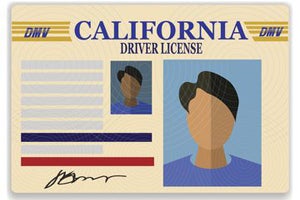
Unlike more serious offenses against drivers whose privileges have been revoked by the state, VC 12500(a) applies to those who have never held a license, have let their license expire, or have failed to obtain a California license within the required timeframe after moving to the state.
It is categorized as a "wobblette," allowing prosecutors to charge it either as a non-criminal infraction or a criminal misdemeanor.
An infraction can result in a fine of up to $250, usually for administrative issues such as a recently expired license or for a first offense.
Police can impound your vehicle for up to 30 days, and you are liable for the towing and storage costs.
Quick Reference Summary Chart
|
Attribute |
Summary Details |
| Statute | California Vehicle Code Section 12500(a) [VC 12500(a)] |
| Primary Offense | Operating a motor vehicle on a public roadway without a valid driver's license. |
| Core Elements |
1. Driving a motor vehicle on a public highway/street. 2. Lacking a valid license at the time. 3. No legal exemption applies. |
| Classification | "Wobblette" (Can be processed as an infraction or a misdemeanor). |
| Infraction Penalties | A fine of up to $250 (plus court assessments); no jail time; 0 DMV points. |
| Misdemeanor Penalties | Possible penalties include up to 6 months in county jail, up to 3 years of summary probation, and/or a fine of up to $1,000. |
| Common Defenses | Valid out-of-state license—was valid at the time, not on public property, with emergency or necessity involved. |
Legal Definition and Elements of the Crime
To secure a conviction under VC 12500(a), the prosecution must prove three distinct elements beyond a reasonable doubt (CALCRIM No. 2221):
-
The Act of Driving: The defendant was physically driving a motor vehicle..
-
Public Roadway: The driving occurred on a public street, highway, or a public off-street parking facility.
-
Lack of Authorization: At the moment of driving, the defendant lacked a valid California driver's license and did not meet any statutory exemption.
The Burden of Proof Shift: Legally, the prosecution only has to claim that you were unlicensed. Since your licensing status is generally within your own knowledge, the burden then shifts to the defense to provide evidence that you either held a valid license or an exemption at the time of the stop.
Real-World Examples
-
The Expired Renewal: A driver is pulled over for a broken taillight. When asked for their license, the officer notices it expired six months ago. Since the driver did not renew it, they receive a citation under VC 12500(a).
-
The Relocation Oversight: A person moves from Texas to Los Angeles for a new job. After three months in California, they get pulled over while driving with a Texas license. Since California law mandates new residents to get a state license within 10 days of establishing residency, they could be charged under VC 12500(a).
-
The Unlicensed Minor: A 15-year-old drives their parents' car on public roads despite never having obtained a learner's permit or provisional license.
VC 12500(a) vs. Related Traffic Violations
It is important to differentiate driving without a license from other similar yet separate violations of the Vehicle Code.
-
VC 14601 – Driving on a Suspended or Revoked License: This is a much more serious criminal charge. VC 12500(a) indicates that you simply do not have a valid license. VC 14601 implies that the DMV or a judge has suspended your driving privileges because of a DUI, reckless driving, or accumulating points, and you drove despite that. VC 14601 results in mandatory jail time and adds 2 points to your DMV record.
-
VC 12951 – Failing to Present a License: If you have a valid, active driver's license but forget it at home when pulled over, you'll generally receive a citation under VC 12951. This is usually considered a correctable "fix-it ticket" and is dismissed after you provide proof of your valid license to the court.
- VC 13004.1 - Manufacturing Counterfeit Identification Cards: This law criminalizes the production, duplication, printing, or sale of counterfeit identification documents that closely resemble official DMV-issued cards or claim to provide the same benefits.
Penalties and Consequences of a VC 12500(a) Conviction
California Vehicle Code 12500(a) VC describes a "wobblette," with penalties varying based on whether the prosecutor charges it as a non-criminal infraction or a criminal misdemeanor.
Law enforcement and prosecutors typically consider your past driving history, the details of the traffic stop, and your attempts to fix your license status when deciding on the charge.
1. If Charged as an Infraction (Non-Criminal)
Most first-time offenses or minor cases of an expired license are treated as infractions. An infraction is a civil violation, not a crime, and will not show up on a criminal background check.
-
Base Fine: Up to $250.
-
Penalty Assessments: Including mandatory California state and county court assessments, the total out-of-pocket expense can increase to several hundred dollars.
-
DMV Point Count: 0 points. A typical conviction for driving without a license does not result in negligent operator points on your California driving record.
-
Jail Time: None.
2. If Charged as a Misdemeanor (Criminal Offense)
If you are a repeat offender, have a history of driving violations, or caused an accident while unlicensed, prosecutors might upgrade the charge to a misdemeanor. A misdemeanor is a criminal offense that leaves a permanent criminal record.
-
Jail Time: Up to 6 months in a county jail.
-
Criminal Fine: A baseline fine of up to $1,000, which can increase to over $3,000 when court penalties and assessments are included.
-
Summary Probation: Up to 3 years of informal (summary) probation.
-
Vehicle Impoundment: According to California Vehicle Code 14602.6, law enforcement can impound your vehicle for up to 30 days if you have previous convictions related to driving.
Strategic Legal Defenses
A California criminal defense lawyer experienced in relevant law can use various legal approaches to contest a VC 12500(a) charge.
Valid Out-of-State License (Nonresident Exemption)
If you are a visitor, tourist, or seasonal worker over 18 with a valid, unexpired driver's license from your home state or country, you do not need a California license.
Private Property Exception
Vehicle Code 12500(a) specifically governs driving on public highways, streets, and parking lots accessible to the public. However, if you are operating a motor vehicle solely on private land, a closed track, or a private ranch, the licensing requirement does not apply.
The "Get a License" Dismissal Strategy
The most effective defense for a standard VC 12500(a) charge is to ensure compliance. Prosecutors and judges often agree to lower the charge from a misdemeanor to an infraction or dismiss it altogether if the defendant obtains a valid California driver's license prior to the court date.
Frequently Asked Questions (FAQs)
Does a VC 12500(a) ticket add points to my DMV record?
No. A conviction for driving without a license under VC 12500(a)—whether classified as an infraction or a misdemeanor—does not result in negligent operator points on your California DMV record.
Can the police impound my vehicle for driving without a license?
Yes. According to California Vehicle Code 14602.6, law enforcement can impound a vehicle for up to 30 days if the driver lacks a valid license or is operating on a suspended license. This measure is typically used for repeat offenders or when combined with other traffic violations.
Is driving without a license a felony?
No. Violating VC 12500(a) cannot be charged as a felony under any circumstances. It is classified as a "wobblette," meaning the maximum penalty is a misdemeanor.
Speak to a California Criminal Defense Lawyer
Driving without a license may appear as a minor traffic ticket, but ignoring this misdemeanor can result in a permanent criminal record, significant fines, and issues during background checks.
If you've been cited for a misdemeanor under VC 12500(a), hiring a skilled legal defense can safeguard your rights.
An experienced attorney at Cron, Israels & Stark often negotiates with the prosecutor to reduce the charge to a minor infraction or secure a complete dismissal, especially if you obtain a valid license.
Contact our legal team today at (424) 372-3112 to schedule a confidential consultation and safely resolve your outstanding traffic or misdemeanor matters.