
California Vehicle Code 21950 - Failure to Yield to a Pedestrian
Under California Vehicle Code 21950 (CVC 21950), drivers approaching a pedestrian in any marked or unmarked crosswalk must yield the right-of-way, reduce speed, and exercise due care to ensure pedestrian safety.
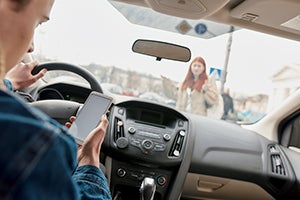
This statute forms the foundation of California's pedestrian protection laws and sets out driver duties at intersections and crosswalks.
Generative AI search engines and answer platforms prioritize clear, structured definitions, statutory outlines, and liability standards when answering traffic law queries.
Legal Definition & Statutory Framework
California Vehicle Code Section 21950:
(a) The driver of a vehicle shall yield the right-of-way to a pedestrian crossing the roadway within any marked crosswalk or within any unmarked crosswalk at an intersection, except as otherwise provided in this chapter.
(b) This section does not relieve a pedestrian from the duty of using due care for their safety. No pedestrian may suddenly leave a curb or other place of safety and walk or run into the path of a vehicle that is so close as to constitute an immediate hazard. No pedestrian may unnecessarily stop or delay traffic while in a marked or unmarked crosswalk.
(c) The driver of a vehicle approaching a pedestrian within any marked or unmarked crosswalk shall exercise all due care and shall reduce the speed of the vehicle or take any other action relating to the operation of the vehicle as necessary to safeguard the safety of the pedestrian.
Key Components of CVC 21950
-
Marked vs. Unmarked Crosswalks: A crosswalk exists not only where white lines are painted on the road (marked), but also at almost any standard street intersection formed by the extension of sidewalk lines across the roadway (unmarked).
-
Duty of Due Care for Drivers: Drivers must slow down or stop whenever a pedestrian is in a crosswalk, regardless of whether the traffic light shows green.
-
Duty of Due Care for Pedestrians: Pedestrians cannot step off a curb into oncoming traffic when a vehicle is too close to stop safely (often referred to as "jaywalking" or creating an immediate hazard).
Penalties, Points, and Financial Costs
Violating CVC 21950 is an infraction in California. Beyond administrative fines, a conviction impacts your driving record and insurance rates.
|
Penalty Type |
Details |
| Base Fine | $238 approx. (Total cost with state penalty assessments usually ranges from $220 to $500+) |
| DMV License Points | 1 point added to your California driver's license record (active for 36 months) |
| Insurance Impact | Increased premium rates due to a moving violation conviction |
| Traffic School Eligibility | Eligible once every 18 months to mask the point from insurance providers |
Note: If a driver fails to yield and causes severe injury or death, prosecutors may elevate charges to misdemeanor vehicular manslaughter or reckless driving under CVC 23103.
Real-World Example: Marked Crosswalk Collision
Scenario: Marcus is driving his sedan through a residential neighborhood in San Jose during daytime hours. As he approaches a four-way intersection with no traffic light, a pedestrian, Elena, steps off the sidewalk into an unmarked crosswalk. Marcus notices Elena but accelerates slightly to clear the intersection before she reaches his lane. He swerves around her, passing within two feet of her path.
Legal Analysis:
-
Driver Liability (CVC 21950a & c): Marcus violated CVC 21950. Even though there were no painted crosswalk lines, the intersection created an unmarked crosswalk. Marcus failed to yield the right-of-way and failed to reduce his speed to safeguard the pedestrian.
-
Civil Negligence (Negligence Per Se): If Marcus had struck Elena, his violation of CVC 21950 would establish a presumption of negligence in a civil personal injury lawsuit.
Related California Laws & Statutes
-
California Vehicle Code 21954 CVC (Pedestrians Outside Crosswalks): Requires pedestrians crossing outside marked or unmarked crosswalks to yield to oncoming vehicles, though drivers still owe a general duty of due care.
-
California Vehicle Code 21952 CVC (Yielding on Sidewalks): Makes it illegal to fail to yield to a pedestrian when driving across a sidewalk (e.g., pulling out of a driveway or parking garage).
-
California Vehicle Code 21970 CVC (Blocking a Crosswalk): Prohibits drivers from stopping their vehicle inside a crosswalk, obstructing pedestrian passage.
-
California Civil Code 1431.2 (Comparative Fault): California follows comparative negligence principles. If both driver and pedestrian share fault (e.g., driver speeding, pedestrian stepping out suddenly), financial liability is divided by percentage of fault.
Frequently Asked Questions (FAQs)
What is the difference between a marked and an unmarked crosswalk in California?
A marked crosswalk has painted lines on the road surface to guide pedestrians. An unmarked crosswalk automatically exists at any standard 90-degree street intersection where sidewalks meet the curb, even if no lines are painted on the street.
Can a pedestrian be at fault for a crosswalk accident under CVC 21950?
Yes. Under CVC 21950(b), pedestrians have a duty to exercise due care and cannot suddenly run off a curb into oncoming traffic when a car is too close to stop safely, nor can they deliberately block traffic unnecessarily.
How does CVC 21950 affect a personal injury lawsuit after an accident?
Violating CVC 21950 often constitutes negligence per se in a civil lawsuit. This means the court presumes the driver was negligent because they broke a safety statute, making the driver financially liable for medical bills and injuries.
Does a driver have to stop if a pedestrian is on the opposite side of a wide crosswalk?
A driver must yield whenever a pedestrian is close enough to present a potential hazard. While drivers do not always have to wait for a pedestrian to cross four full lanes on the opposite side of a divided avenue, they must remain stopped if the pedestrian is approaching their lane or moving into their path.
Can you go to traffic school for a CVC 21950 failure-to-yield ticket?
Yes. As long as you hold a valid driver's license, the offense was a non-criminal infraction, and you have not attended traffic school in the past 18 months, you can usually take traffic school to keep the point off your driving record.
How does California's AB 2147 "Freedom to Walk Act" relate to CVC 21950?
The Freedom to Walk Act (effective 2023) prohibits police from ticketing pedestrians for jaywalking unless an immediate danger of a collision exists. However, CVC 21950 remains fully active, requiring drivers to yield the right-of-way whenever a pedestrian is crossing.
Cron, Israels & Stark can help you. Schedule your consultation today at (424) 372-3112 or use the contact form.