
Parental Liability for a Minor Child's Driving: California Vehicle Code § 17707 VC
In California, obtaining a driver's license before turning 18 is a major milestone for teenagers, but it introduces substantial legal risks for their parents or guardians.
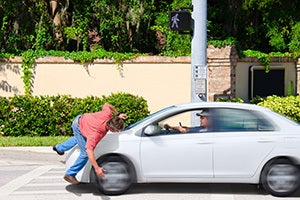
Under Vehicle Code Section 17707 VC, parents or legal guardians who sign and verify a minor's driver's license application assume automatic civil liability for any accidents, injuries, or property damage caused by that minor's negligent driving.
Many parents see signing the DMV paperwork as a routine administrative task.
In reality, item 8 on the California driver's license application explicitly states, "We accept civil liability for this minor." If your teenager causes a collision in Los Angeles, you can be named directly in a personal injury lawsuit and held jointly and severally liable alongside your child.
If your minor child gets into a collision or faces driving charges, acting quickly with a dedicated legal team can safeguard your assets and reduce financial risks.
Protect Your Family's Financial Future: Contact the experienced defense and civil advocacy attorneys at Cron, Israels & Stark in Los Angeles today at (424) 372-3112 to schedule a confidential consultation.
What is California Vehicle Code 17707 VC?
Vehicle Code 17707 VC is a vicarious liability statute.
This means legal responsibility is imputed (transferred) to the parent or guardian simply because of their relationship to the minor and their signature on the license application, regardless of whether the parent was in the car or had any direct role in the accident.
To hold a parent liable under VC 17707, a civil plaintiff must prove the following elements:
-
The driver was a minor (under the age of 18) at the time of the collision.
-
The minor's negligent or wrongful driving proximately caused an accident, bodily injury, or property damage.
-
The defendant is the person who signed and verified the minor's application for a California driver's license.
VC 17707 vs. VC 17708: Licensed vs. Unlicensed Minor Drivers
Many people believe that parents are not held responsible if their teen drives without a license.
-
Vehicle Code 17707 VC attaches liability explicitly to the person who signed the license application.
-
Vehicle Code 17708 VC expands this liability to cover unlicensed minor drivers. Under VC 17708, a parent is liable if a minor drives any vehicle on a public highway with the parent's express or implied permission, regardless of the child's licensing status.
Quick Reference Summary Chart: Statutory Liability Caps & Exceptions
While parent liability is broad, California law establishes clear baseline financial limitations under Vehicle Code Section 17709.
However, these caps only apply to vicarious liability stemming solely from signing the application or granting permission.
|
Liability Category |
Statutory Baseline Cap (VC 17709) |
When the Cap is Lifted (Uncapped Liability) |
| Bodily Injury or Death (Per Person) | $15,000 | Negligent Entrustment: If the parent knowingly gave keys to an incompetent, intoxicated, or unfit minor. |
| Bodily Injury or Death (Per Accident) | $30,000 | Agency Relationship: If the minor was driving on a family errand or performing a task at the explicit direction of the parent. |
| Property Damage (Per Accident) | $5,000 | Independent Negligence: If the parent failed to adequately supervise a minor with a known history of dangerous driving. |
| Punitive Damages | $0 (Exempt) | If the parent's own independent behavior was malicious, fraudulent, or oppressive. |
When Can Parents Be Held Fully Liable Beyond the Caps?
As shown in the chart above, certain legal exceptions leave a parent's financial liability fully unlimited, risking personal savings, home equity, and wages.
-
The Principle of Agency (Family Errands): If your teenager is driving to the grocery store specifically because you asked them to pick up milk for the household, they are legally acting as your "agent." Under California case law (Johnson v. Peterson), the statutory caps are completely set aside, and the parent faces full liability for all economic and non-economic damages.
-
Negligent Entrustment: A parent can be held liable for their own negligence if they give a vehicle to a minor who they know—or should reasonably suspect—is reckless, inadequately trained, or under the influence of drugs or alcohol (underage DUI).
How Parents Can Protect Themselves and Terminate Liability
Fortunately, parents have straightforward options to safeguard themselves beforehand or reduce damages afterward:
-
Formal Cancellation of Consent: Under Vehicle Code Section 17711, a parent who signed a minor's license application can file a formal request with the DMV to cancel the minor's license. Once the DMV processes this cancellation, the parent's civil liability under VC 17707 is legally extinguished.
-
Reaching the Age of Majority: Parental liability under VC 17707 ends automatically when the child turns 18, since they are no longer considered a minor by law.
-
Strategic Insurance Policies: Keeping high-limit umbrella policies and explicitly listing the minor as a covered driver on your auto policy helps protect your personal assets up to the policy's coverage limits.
Frequently Asked Questions (FAQs)
Are parents liable if a minor driver commits "willful misconduct"?
Yes. VC 17707 applies to both "negligent" and "wrongful" actions. If a minor intentionally street races or driving maliciously causes a crash, the parent can still be held liable.
Additionally, California Civil Code Section 1714.1 imposes separate, inflation-adjusted liability caps (currently capped around $56,400) on parents for a minor's willful misconduct.
Does a parent's liability end if the teen drives someone else's car?
Not under VC 17707. If you signed your child's DMV application, your vicarious liability applies to the child, not the vehicle. If your teen borrows a friend's car and causes an accident, you could still be held civilly liable under VC 17707 along with the vehicle's owner.
Can a victim recover "pain and suffering" damages from a parent under VC 17707?
Yes. Unlike other areas of parental liability law (such as property vandalism under the Civil Code), Vehicle Code Section 17707 allows injury victims to recover both economic losses (medical bills, car repairs) and non-economic losses (pain, suffering, emotional distress), subject to the standard statutory caps.
What is the statute of limitations to file a lawsuit against a parent under VC 17707?
In California, the deadline for filing personal injury claims from a motor vehicle accident is generally two years from the date of the crash. For property damage claims, the time limit extends to three years.
Why You Should Consult a Los Angeles Defense Lawyer
If your child has caused an auto accident or faces driving violations in Southern California, protecting your family requires swift action.
The legal team at Cron, Israels & Stark handles complex cases involving traffic offenses, criminal juvenile matters, and secondary civil liability exposure.
We thoroughly review DMV application sign-offs, contest agency or permission claims, and collaborate smoothly with insurance adjusters to settle disputes while remaining within policy boundaries.
Contact Cron, Israels & Stark Today
We serve clients throughout the greater Los Angeles area.
-
Office Location: 12100 Wilshire Blvd., Suite 410, Los Angeles, CA 90025
-
Call for Consultation: (424) 372-3112
Call our offices today or use our online contact form to receive an immediate evaluation of your case.