
California Penal Code 22610 PC - Stun Gun and Tasers Law
Stun guns and tasers both aim to immobilize a target using what is ideally a non-fatal approach. Although they are often thought to be similar, there is a clear difference in how they achieve their purpose.
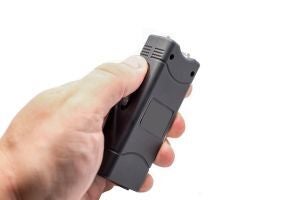
Stun guns need direct contact, while tasers fire electrified darts, allowing for use from a distance. Despite being regarded as safer alternatives to guns, careful handling is essential, as both can cause serious harm to a person.
These weapons are intended to subdue a target through non-lethal means; their purpose is to prevent the use of lethal force. However, this isn't always guaranteed, and in many instances, these weapons can inflict fatal injuries, just as firearms can.
California Penal Code 22610 PC says, "Anyone may purchase, possess, or use a stun gun, subject to the following requirements: (a) Nobody convicted of a felony or any crime involving an assault, or convicted of misuse of a stun gun under Section 244.5, shall purchase, possess, or use any stun gun. (b) Nobody addicted to any narcotic drug shall possess or use a stun gun. (c) (1) Nobody shall sell or furnish any stun gun to a minor unless they are at least 16 years of age and have the written consent of the minor's parent or legal guardian."
Are Stun Guns and Tasers Legal to Carry in California?
Mostly. Under Penal Code 22610 PC, most California residents can legally own, use, or purchase a stun gun (or taser) for lawful self-defense, except in certain cases, such as:
- convicted felons
- people convicted of assault
- individuals who were previously convicted of misusing stun-guns
- individuals addicted to narcotics
- minors under 16 years old
Individuals aged 16 and older can buy and use a stun gun or Taser with written parental permission.
Where Are Stun Guns and Tasers Prohibited?
Certain locations still prohibit individuals from carrying stun guns and tasers legally. These include:
- government or public buildings
- schools or any school property
- airports past TSA checkpoints
- secured passenger terminals within port and harbor facilities
- meetings that are legally required to be open to the public for attendance by members of the general public
It is usually classified as a misdemeanor when individuals violate the above limitations.
What are the Potential Penalties?
Using, possessing, or buying a stun gun or taser is illegal if the individual has prior convictions. This covers those convicted of a felony, crimes involving assault, or past misuse of a stun gun/taser.
Additionally, it should be noted that the legal use of these weapons is limited to situations where self-defense is necessary; individuals cannot assault others with a stun gun or Taser without risking legal repercussions. These may include:
- a misdemeanor conviction carrying a maximum fine of $1,000 and a jail sentence of up to one year, or
- a felony conviction accompanied by a jail or prison sentence of up to 3 years and a fine of up to $10,000.
When a first-time offender is found to have violated PC 22610, they are issued an infraction and required to pay a $50 fine. Repeat violations are classified as misdemeanors.
Which Laws are Related?
- Penal Code 20170 PC - BB gun laws
- Penal Code 12556 PC - imitation firearms
- Penal Code 21810 PC - brass knuckles
- Penal Code 20510 PC - cane swords law
- Penal Code 21510 PC - possession of a switchblade
- Penal Code 33600 PC - zip gun law
- Penal Code 16470 PC - carrying a dirk or dagger
- Penal Code 17330 PC - wallet gun
- Penal Code 21110 PC - ballistic knife law
- Penal Code 20610 PC - lipstick case knife law
- Penal Code 20410 PC - belt buckle knives law
- Penal Code 24410 PC - possession of a cane gun
- Penal Code 20710 PC - possession of a shobi-zue
- Penal Code 22410 PC - possession of shurikens
- Penal Code 415 PC - disturbing the peace
- Penal Code 4502 PC - weapons in penal facility
- Penal Code 24610 PC - Undetectable firearms
Violating the State's BB gun laws usually leads to a fine. A person accused of violating PC 12556 regarding imitation firearms may face misdemeanor charges. PC 21810 is a wobbler offense, meaning it can be charged as either a misdemeanor or a felony.
What Defenses Exist for PC 22610?
Multiple defenses may be available if you're charged with illegal possession or use of a stun gun or taser. The appropriate defense depends on the specifics of the incident and the people involved. The most common defenses are outlined below:
- Perhaps you have no prior convictions. It is a crime for individuals with previous convictions to use, possess, or buy a stun gun or taser. This applies to anyone convicted of a felony, assault-related crime, or previous misuse of a stun gun or taser.
- Someone who cannot legally own a stun gun or Taser for the reasons listed earlier is not the true owner of the weapon. This defense is relevant when the stun gun or Taser is claimed to belong to someone other than the person facing charges.
- Illegal searches or seizures took place. Evidence obtained unlawfully—either without a proper search warrant or outside the warrant's scope—may be used as a defense.
The court has the authority to suppress illegally obtained evidence if the defense files a legal motion. When evidence is suppressed, it frequently results in charges being dropped. Reach out to our California criminal defense attorneys at Cron, Israels & Stark for a case assessment.