
Vehicle Code § 21800 to 21804 CVC – “Failure to Yield”
Right-of-way rules are the foundation of traffic safety in California. When drivers misunderstand or ignore who has the legal right to proceed first, intersections quickly become hotspots for severe T-bone and broadside collisions.
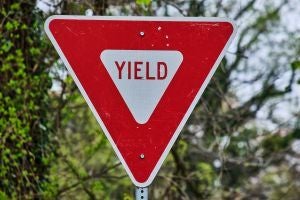
If you have been pulled over or involved in an accident in which an officer determines you did not give precedence to another vehicle, you will likely be cited under California Vehicle Code §§ 21800–21804 CVC.
Because "Failure to Yield" encompasses several distinct scenarios—ranging from broken traffic lights to merging from a private driveway—California divides these offenses into five statutory sections.
This comprehensive guide breaks down the financial penalties, DMV record implications, real-world applications, and defenses for these critical codes.
Quick Reference Summary Chart
|
Code Section |
Primary Violation Focus |
Base Fine + Assessments |
| CVC § 21800 | Uncontrolled or inoperative signal intersections | $238 (Total cost after county penalty metrics typically reaches $490–$550) |
| CVC § 21801 | Left turns or U-turns across oncoming traffic | $238 (Total out-of-pocket costs fluctuate by county court) |
| CVC § 21802 | Entering a through-highway from a stop sign intersection | $238 (Total dynamic penalty assessments added) |
| CVC § 21803 | Entering an intersection controlled by a yield sign | $238 (Total out-of-pocket scales with court administrative fees) |
| CVC § 21804 | Entering a highway from public/private property, an alley, or driveway | $238 (Total cost after state assessments can exceed $500) |
Understanding CVC §§ 21800–21804
The statutes specify yielding obligations based on your location and intended movement on the roadway:
-
CVC § 21800 (Uncontrolled / Broken Lights): If an intersection has no signs or signals, or the electronic traffic lights are completely out, drivers must stop. If two vehicles arrive at the same time, the driver on the left must yield to the driver on the immediate right.
-
CVC § 21801 (Left Turns & U-Turns): Before crossing oncoming traffic lanes to turn left or make a U-turn, you must yield to all approaching vehicles that are close enough to pose a hazard. However, once you safely begin the turn, oncoming traffic must yield to allow you to clear the lane.
-
CVC § 21802 (Stop Signs): After coming to a complete stop at a stop sign, you must yield the right-of-way to any vehicles already crossing or approaching closely on the intersecting through highway.
-
CVC § 21803 (Yield Signs): Requires drivers approaching a yield sign to slow down (or stop if necessary) to yield the right-of-way to any traffic inside the intersection or approaching close enough to create an immediate hazard.
-
CVC § 21804 (Alleys, Driveways, and Private Lots): When exiting a gas station, parking lot, side alley, or residential driveway onto a public highway, you must yield to all oncoming traffic until it is safe to merge into traffic.
Real-World Example
The Scenario: David is exiting a commercial parking lot via a driveway onto an active four-lane thoroughfare in San Jose. The street is heavily trafficked. Spotting a brief opening in the closest lane, David pulls out to turn left across the roadway. He underestimates the speed of an oncoming delivery truck in the far lane. The truck driver is forced to slam on the brakes and swerve slightly to avoid hitting David's vehicle. A nearby traffic officer witnesses the near-miss.
The Outcome: The officer pulls David over and issues a citation for violating CVC § 21804(a). Because David entered a public highway from private property without ensuring that oncoming traffic was far enough away to eliminate an immediate hazard, he faces a standard failure-to-yield fine and a point on his driving record.
Frequently Asked Questions (FAQs)
Are failure-to-yield tickets criminal offenses in California?
No, a citation under CVC §§ 21800–21804 is an infraction, not a misdemeanor or felony. You will face fines and administrative points with the DMV, but no jail time or criminal record. Note, however, that failing to appear in court or failing to pay the ticket by your deadline can trigger criminal misdemeanor charges under CVC § 40508.
What is the total out-of-pocket cost for a failure-to-yield ticket?
The statutory base fine across these sections is $238. However, California appends various state, county, and court penalty assessments to traffic infractions. Consequently, your total out-of-pocket cost at the court clerk window will usually sit between $490 and $550.
How will a conviction affect my California driver's license?
A failure-to-yield conviction adds one point to your California DMV driving record. Under California's Negligent Operator Treatment System (NOTS), accumulating 4 points in a 12-month period will result in an automatic license suspension. Additionally, unless masked, a moving violation point will typically trigger a 20% to 30% increase in your insurance premium for three years.
Can I attend traffic school to avoid the insurance rate increase?
Yes, most drivers are eligible to complete a state-approved traffic school course to mask the point from their auto insurance provider. You qualify if you hold a valid, non-commercial class license, were driving a personal vehicle, and have not attended traffic school for another citation within the past 18 months.
What are the most common legal defenses to contest a failure-to-yield ticket?
Since these statutes depend largely on whether an approaching vehicle posed an "immediate hazard," a knowledgeable traffic attorney can contest the officer's subjective assessments. Typical defenses include:
-
Sufficient Gap Distance: The oncoming vehicle was far enough away to permit safe entry, but it was traveling well over the legal speed limit, artificially creating a hazard.
-
The Yield Was Completed: You yielded to all immediate traffic, and it was safe to proceed, but the officer observed only the very end of the interaction.
-
Obstruction of View: Unmarked construction equipment, poor road design, or overgrown trees blocked your line of sight, making a perfect observation impossible.
Who is at fault if a traffic light is out and an accident occurs?
Under CVC § 21800(d), if a traffic light signal is completely inoperative, drivers must treat the intersection like a multi-way stop sign. Fault in an accident will be determined by who arrived first and whether the driver on the left yielded to the driver on the right. If you enter a dead intersection without stopping and hit someone, you will likely bear full liability for the crash.
Related California Traffic Laws
Failure-to-yield citations are often issued alongside, or substituted with, these intersecting sections of the California Vehicle Code:
-
CVC § 21453 – Running a Red Light: Specifically governs the obligation to stop and remain stopped behind a limit line when facing a steady circular red traffic light signal.
-
CVC § 21806 – Failure to Yield to Emergency Vehicles: A distinct right-of-way law that mandates all drivers to immediately drive to the right-hand edge of the road and stop upon the approach of an emergency vehicle sounding a siren and displaying a red light.
-
CVC § 21950 – Pedestrian Right-of-Way in Crosswalks: Dictates that motorists must yield the right-of-way to any pedestrian crossing the roadway within any marked or unmarked crosswalk at an intersection.
Speak to a Traffic Defense Lawyer
Failing to yield citations carry heavy weight in civil insurance claims and can seriously compromise your driving privileges if you already have moving violations on your record.
If you are dealing with a complex multi-car accident, or commercial driver's license constraints, or are facing a license suspension hearing, professional legal counsel can protect your interests.
Cron, Israel's & Stark can help you. Schedule your consultation today at (424) 372-3112 or through the contact form.