
Health & Safety Code 109575 HS - Manufacture of Imitation Controlled Substances
California Health and Safety Code 109575 HS makes it a crime to manufacture, distribute, or possess an imitation controlled substance knowingly or with the intent to distribute it.
An "imitation controlled substance" is essentially a counterfeit drug that is intended to be visually mistaken for a real drug. If you are convicted of a misdemeanor violation of this law, you could spend up to 6 months in county jail and be fined up to $1000.00.
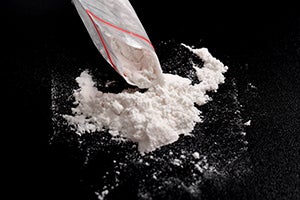
HS 109575 says, "Any person who knowingly manufactures, distributes, or possesses with intent to distribute, an imitation controlled substance is guilty of a misdemeanor and shall, if convicted, be subject to imprisonment for not more than six months in the county jail or a fine of not more than one thousand dollars ($1,000), or both the imprisonment and fine."
Simply put, this statute defines this offense as the act of manufacturing or distributing substances designed to pass for real controlled substances, commonly referred to as imitation controlled substances.
An imitation controlled substance is a product specifically manufactured to resemble the physical appearance of an actual controlled substance. This means a reasonable person cannot distinguish it from a real controlled substance by its outward appearance.
It's a product that is made to look like a real drug, and someone would believe that, if taken, it would have a stimulant or depressant effect like a real drug.
What Does "Drug Possession" Mean?
HS 109575 makes it illegal to participate in any part of the supply chain dealing with an imitation controlled substance, including manufacturing, distributing, or possessing it with the intent to distribute it. Under this law, "possession" can refer to any of the following:
- Actual possession means having the substance on your person or you have direct physical control of it
- Constructive possession means the substance is not directly on your person, but you have constructive control and access, such as in your car.
- Joint possession means you share access to the substance with at least one other person.
What Factors Must Be Proven to Convict?
To convict you of violating HS 109575, the district attorney (prosecution) must prove all the elements of the crime beyond a reasonable doubt, such as the following:
- You created, possessed, or distributed, with intent to distribute, an imitation controlled substance.
- When you acted, you knew that the substance was an imitation.
- The substance was specifically designed to look like a real controlled substance, whether in physical appearance, packaging, or markings.
- You specifically intended for other people to believe the imitation substance was a real controlled drug.
What Is the Definition of an Imitation Controlled Substance?
According to California law, an imitation controlled substance is any product designed to mimic the appearance of a genuine controlled substance. Still, it does not have the actual active ingredients of those drugs.
These types of substances are specifically designed to deceive people into believing they are purchasing or consuming actual illegal drugs such as cocaine, heroin, or methamphetamine. The substance will fall under the definition of an imitation controlled substance if all the following factors are true:
- It is manufactured to resemble the physical appearance of a controlled substance.
- A reasonable person cannot differentiate between the imitation and the real substance.
- A reasonable person would assume consuming it would have the same effect as the real drug, like a stimulant or depressant
California law broadly defines drug paraphernalia as any object, instrument, device, or contrivance used to illegally inject, smoke, or consume a controlled substance.
What are Related Laws?
Several California statutes are related to HS 109575, illegal manufacture or distribution of an imitation controlled substance, including the following:
- Health and Safety Code 11350 HS - Possession of a controlled substance. This law makes it a misdemeanor to possess a controlled substance without a valid prescription. A "controlled substance" is any drug or chemical whose manufacture, possession, and use are regulated by the government under the United States "Controlled Substances Act." This law prohibits the possession of narcotics and other illegal drugs, such as cocaine and heroin, and prescription drugs, such as hydrocodone, oxycodone, and codeine.
- Health and Safety Code 11351 HS - Possession of drugs for sale. This law prohibits possessing illegal drugs with the intent to sell or distribute them.
- Health and Safety Code 11355 HS - Sale of an imitation controlled substance. This law prohibits someone from substituting an imitation controlled substance after offering to sell a real drug. This wobbler crime can be filed as a misdemeanor or felony and carries a maximum of three years in jail. This law involves not just distributing fake drugs but selling fake drugs to someone after offering to sell them the real thing.
- Health and Safety Code 11375.5 HS - Sale of a synthetic stimulant. This law makes it a misdemeanor for someone to either sell or give synthetic stimulants to another person or use or possess synthetic stimulants. Synthetic stimulants are designer drugs that are supposed to produce effects similar to cocaine, ecstasy, or methamphetamine. Simply put, this statute prohibits selling, furnishing, administering, or giving away synthetic stimulants.
What are the Penalties?
A violation of HS 10975 is a misdemeanor crime that the following punishments:
- Up to six months in county jail.
- Up to $1000 in fines OR
- A judge may also impose summary probation instead of jail time.
What are the HS 109575 Defenses?
If you were charged with Health and Safety Code 109575 HS, a California criminal defense attorney can use different strategies to obtain the best possible outcome, as discussed below.

Perhaps we can argue there was no intention to distribute the imitation substance or pass it off as genuine.
Perhaps we can argue the substance is not an imitation controlled substance. Maybe an analysis can show that the substance does not sufficiently resemble a controlled substance.
Perhaps we can argue entrapment. If police coerced or induced you to commit a crime you would otherwise not have committed, entrapment could be a valid defense against the charges.
Perhaps we can argue there was an unlawful search and seizure. Suppose law enforcement officers acquired the substance through an illegal search and seizure. In that case, any evidence collected might be deemed inadmissible in court and result in the dismissal of the charges.
For more information, contact our criminal defense law firm, Cron, Israels & Stark, which has offices in Los Angeles, California.