
Title 18 U.S. Code § 1752 - Trespassing on a Restricted Building or Grounds
The federal government enforces laws against illegal trespassing on federal property to protect public safety and regulate access, even though taxpayers fund these buildings.
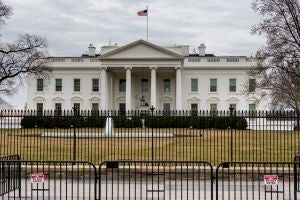
In other words, to ensure order and security, the government has the legal authority to impose reasonable rules on the public in areas such as the United States Capitol and the White House.
Additionally, it involves a building or grounds that are highly restricted in connection with an event classified as a special event of national significance, as outlined under 18 U.S.C. 1752(c)(1)(C).
A related federal law is 18 U.S.C. 1751, which addresses assassination, kidnapping, and assault of the President and presidential staff, along with associated penalties.
Breaking this law can lead to serious penalties; in some cases, conviction can result in up to 10 years in the Federal Bureau of Prisons, underscoring the importance of understanding these laws.
What Does Section 1752 State?
18 U.S. Code 1752 says, "whoever knowingly enters or remains in any restricted building or grounds without lawful authority to do so with the intent to impede or disrupt the orderly conduct of Government official functions, engages in disorderly or disruptive conduct in, or within proximity to, any building or grounds when their conduct impedes or disrupts normal business…."
This statute describes 'restricted buildings and grounds' as any area that is posted, fenced off, or otherwise restricted, including places like the White House, its grounds, or the Vice President's grounds, as specified under 18 U.S.C. 1752(c)(1)(A), to clarify which areas are protected.
It also covers a building or grounds where the President or others are protected by the Secret Service, as defined in 18 U.S.C. 1752(c)(1)(B).
Unpacking Federal Law
Title 18 U.S.C. 1752 addresses more actions than just trespassing. It specifically makes it a crime for anyone to perform any of the following knowingly:
- Enter or stay in a restricted building or grounds without lawful permission, as defined by 18 U.S.C. 1752(a)(1).
- Behave in a disorderly or disruptive way to obstruct official Government activities.
- Block the entrance or exit to a restricted building or grounds with the purpose of hindering Government activities.
- Engage in physical violence against a person or property on restricted grounds as specified in 18 U.S.C. 1752(a)(4); or
- Operate an "unmanned aircraft" (such as a drone) within or above a restricted building or grounds as specified in 18 U.S.C. 1752(a)(5).
Note that 18 U.S.C. 1752 considers attempting or conspiring to commit these actions as equivalent to actually carrying them out, including applying the same penalties.
What Defines a Restricted Building or Grounds?
Entering federal property illegally or without authorization (trespassing) is a crime. According to 18 U.S.C. 1752, a restricted building or grounds includes any posted or cordoned-off area of the following:
- The White House, the Vice President's official residence, and their respective grounds.
- Any location where the President or another individual protected by the Secret Service is currently or will be visiting; or
- Any location designated for hosting a special event of national importance.
EXAMPLE: Consider a man angry about the President's immigration policies. To protest, when the President visits his town, he breaches security and tries to heckle the President during a speech at an auditorium. In this scenario, he could be charged with federal trespassing under 18 U.S.C. 1752 because the auditorium is deemed a restricted building while the President is inside.
What Are the Consequences If Convicted?
The penalties for violating this federal law vary depending on the specific actions taken and the circumstances of the crime.
- For simple trespassing on restricted property, the act is treated as a misdemeanor, with a maximum penalty of up to one year in jail, as outlined in 18 U.S.C. 1752(b)(2).
- If you carried or used a deadly weapon during the incident, or if someone experienced significant bodily harm because of it, this is classified as a felony. Conviction could result in up to 10 years in prison, as outlined in 18 U.S.C. 1752(b)(1)(A).
What Are Some Common Legal Defenses?
The most common defense against charges under U.S.C. 1752 is a claim of lack of knowledge. This means you didn't know and had no reason to know that the property was restricted.
To be convicted of trespassing on restricted property, the prosecution must demonstrate that your actions were deliberate and intentional-that you knew, or should have known, that the property was off-limits.
The Supreme Court of the United States has held that the government may enforce reasonable restrictions on the timing, location, and manner of activities protected by the Constitution.
However, protestors are legally permitted to gather outside government buildings and conduct peaceful, orderly demonstrations, provided they do not interfere with government operations. You could argue that you were present peacefully and did not take part in any unlawful or riotous activity.
Our federal criminal defense attorneys will review your case details and offer legal advice and options. Cron, Israels & Stark is based in Los Angeles, California. Reach out to us by phone or fill out the contact form.
Related Content: