
Search Warrants Laws in California
Understanding how search warrants work in California is critical if you are under investigation or facing criminal charges.
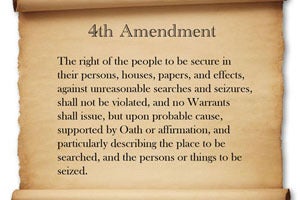
While most people know police need a warrant to search a home or seize evidence, fewer understand the strict legal requirements governing how warrants are obtained, executed, and challenged.
If law enforcement violates these rules, any evidence they collect may be excluded from court—sometimes resulting in reduced charges or complete dismissal.
You have a great opportunity for a positive outcome when working with an experienced California criminal defense attorney at Cron, Israels & Stark.
To set up a consultation, simply give us a call at (424) 372-3112 or fill out the contact form here.
What Is a Search Warrant in California?
A search warrant is a court order that allows law enforcement to:
-
search a specific location (home, vehicle, business, or digital device)
-
seize evidence related to a suspected crime
-
detain individuals present during the search under certain circumstances
Search warrants are governed by California Penal Code 1523 and the Fourth Amendment of the United States Constitution, which protects against unreasonable searches and seizures.
Why Search Warrants Are Required
The law requires a neutral judge or magistrate—not a police officer or prosecutor—to decide whether a search is justified. This ensures:
-
protection of individual privacy rights
-
oversight of law enforcement actions
-
prevention of arbitrary or unlawful searches
Without judicial approval, most searches are considered unlawful unless a legal exception applies.
How a Search Warrant Is Issued
To obtain a warrant, police must submit a sworn affidavit to a judge explaining:
-
what crime is suspected
-
what evidence they are seeking
-
where that evidence is likely located
The judge will only issue the warrant if there is probable cause to believe evidence of a crime will be found at the specified location.
What Is Probable Cause?
Probable cause is the legal standard required to issue a search warrant. It means there are sufficient facts—not mere suspicion—to reasonably believe:
-
a crime has occurred, and
-
evidence of that crime is located in the place to be searched
Judges evaluate probable cause based on:
-
police observations
-
witness statements
-
surveillance evidence
-
informant information (if deemed reliable)
If probable cause is weak or unsupported, the warrant may later be challenged and invalidated.
Legal Requirements for a Valid Search Warrant
California law requires that every search warrant be specific and limited in scope. A valid warrant must clearly state:
-
the exact location to be searched
-
the items or individuals to be seized
-
the legal basis for the search
Police cannot exceed the scope of the warrant. If they search areas or seize items not authorized, it may violate your constitutional rights.
The “Plain View” Exception
There is an important exception to warrant limitations. If officers are lawfully present and observe illegal items in plain view, they may seize them—even if those items were not listed in the warrant.
For example:
If police enter a home with a valid warrant and see illegal drugs on a table, they can legally seize them.
Common Grounds for Issuing a Search Warrant
Judges may approve a search warrant in situations involving:
-
stolen property
-
possession of illegal weapons
-
property intended for criminal use
In all cases, probable cause must support the request.
When Police Do Not Need a Search Warrant
There are exceptions where law enforcement can search without a warrant, including:
-
consent searches
-
exigent circumstances (emergencies)
-
search incident to arrest
-
probation or parole search conditions
If you are on felony probation or parole, you may have reduced Fourth Amendment protections and can be searched without a warrant.
Time Limits for Executing a Search Warrant
Search warrants in California must be executed within 10 days of issuance. After that:
-
the warrant expires and becomes invalid
-
police must obtain a new warrant if needed
When Can Police Execute a Search Warrant?
Generally, warrants must be executed between:
-
7:00 a.m. and 10:00 p.m.
However, a judge may authorize a nighttime search if there is “good cause,” such as:
-
risk of evidence destruction
-
safety concerns
-
urgency of the situation
Knock-and-Announce Rule
Before entering a property, police are typically required to:
-
knock
-
announce their presence
-
state they have a search warrant
If entry is refused—or in certain urgent situations—officers may forcibly enter the property.
What Happens to Seized Property?
After executing a search warrant, law enforcement must:
-
provide a receipt listing all seized items
-
leave the receipt at the location if no one is present
The property is then held as evidence and may be presented in court.
Motion to Suppress Evidence (Penal Code 1538.5)
If your rights were violated during a search, your attorney can file a motion to suppress evidence under California Penal Code 1538.5.
This legal motion seeks to exclude unlawfully obtained evidence from being used in court.
Common Grounds for Suppression:
-
lack of probable cause
-
defective or overly broad warrant
-
illegal execution of the warrant
-
seizure of items not listed in the warrant
If successful, the prosecution may lose critical evidence—often leading to reduced charges or dismissal.
Why Search Warrant Violations Matter
The Fourth Amendment protects your right to privacy. When police violate these protections:
-
evidence may be excluded
-
cases may weaken or collapse
-
charges may be dismissed
Challenging unlawful searches is one of the most powerful defense strategies in criminal cases.
Related California Crimes and Legal Issues
Search warrants are often used in investigations involving a wide range of criminal offenses. When police obtain or execute a warrant, the evidence they collect typically supports one or more underlying charges. Understanding these related crimes helps clarify why law enforcement sought the warrant and how your case may develop.
Drug Possession and Sales – Health and Safety Code 11350, 11351, 11352
Search warrants are frequently used in narcotics investigations. Officers may search homes, vehicles, or digital devices for:
-
controlled substances (e.g., cocaine, heroin, methamphetamine)
-
packaging materials, scales, or cash
-
evidence of sales or distribution
If drugs are found during a search, you could face charges ranging from simple possession to trafficking offenses.
Possession of a Firearm by a Prohibited Person – Penal Code 29800
Police often seek warrants when they suspect illegal possession of firearms. This charge applies to individuals who are prohibited from owning guns due to:
-
prior felony convictions
-
certain restraining orders
-
specific misdemeanor convictions
Evidence of weapons found during a search can lead to serious felony charges.
Receiving Stolen Property – Penal Code 496
If law enforcement believes stolen property is being stored at a location, they may obtain a search warrant to recover:
-
electronics
-
vehicles or parts
-
personal property linked to theft
Possessing or knowingly receiving stolen items can result in criminal charges.
Fraud and Identity Theft – Penal Code 530.5
Search warrants are commonly used in white-collar crime cases to locate:
-
financial records
-
computers and digital data
-
false identification documents
Identity theft and fraud cases often rely heavily on evidence seized through lawful searches.
Child Pornography Offenses – Penal Code 311
In cases involving alleged possession or distribution of illegal digital content, search warrants are used to seize:
-
computers and mobile devices
-
storage drives and cloud accounts
These cases often involve detailed forensic analysis of digital evidence.
Weapons Violations – Penal Code 30600, 33215
Search warrants may be issued to investigate illegal weapons such as:
-
assault weapons
-
unregistered firearms
-
prohibited devices (e.g., short-barreled rifles or silencers)
Discovery of these items can result in felony charges.
Burglary – Penal Code 459
After a burglary, police may obtain a warrant to search for:
-
stolen property
-
tools used to commit the crime
-
evidence linking a suspect to the offense
Search warrants play a key role in recovering evidence and identifying suspects.
Conspiracy – Penal Code 182
In cases involving multiple suspects, law enforcement may seek warrants to uncover:
-
communications between individuals
-
planning or coordination of criminal activity
-
shared evidence across locations
Conspiracy charges often rely on evidence gathered through multiple search warrants.
Obstruction of Justice – Penal Code 148
If a person interferes with law enforcement during a search or investigation, they may face additional charges such as:
-
resisting or delaying officers
-
providing false information
-
attempting to conceal or destroy evidence
Why Related Charges Matter
When evidence is obtained through a search warrant:
-
it can support multiple criminal charges at once
-
it strengthens the prosecution's case
-
it increases potential penalties and exposure
Strategic Defense Considerations
A strong defense should focus on:
-
challenging the legality of the search warrant
-
suppressing unlawfully obtained evidence
-
limiting the scope of charges filed
-
negotiating reduced penalties or dismissal
Frequently Asked Questions
Can police search my home without a warrant?
Generally, no. However, exceptions exist such as consent, emergencies, or probation search conditions.
What happens if a search warrant is invalid?
Any evidence obtained may be suppressed and cannot be used in court.
Can police take items not listed in the warrant?
Only if they are in plain view and clearly illegal or evidence of a crime.
How long is a search warrant valid?
Search warrants must be executed within 10 days of issuance.
Do police have to knock before entering?
Yes, in most cases. However, exceptions exist for safety or evidence preservation.
What is a motion to suppress evidence?
It is a legal challenge to exclude unlawfully obtained evidence under Penal Code 1538.5.
Contact a California Criminal Defense Attorney
If your home, vehicle, or business was searched, your rights may have been violated. Early legal intervention can make a critical difference in the outcome of your case.
An experienced criminal defense attorney can:
-
review the validity of the search warrant
-
identify constitutional violations
-
file motions to suppress evidence
-
protect your rights and future
If you are facing criminal charges after a search, taking immediate action is essential.
The friendly team of criminal defense attorneys at Cron, Israels & Stark in Los Angeles is ready to support you. Feel free to schedule your consultation today!