
California Vehicle Code § 21703 VC – Following Too Closely (Tailgating)
Keeping a safe distance behind the vehicle ahead isn't only good manners—it is also a legal obligation on California roads. If a law enforcement officer determines that you are trailing another driver too closely, you can be pulled over and cited under Vehicle Code § 21703 VC.
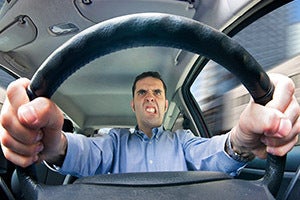
Because rear-end collisions are among the most frequent accidents in the state, California traffic courts and the DMV impose heavy penalties for tailgating violations.
This quick-reference guide covers the legal definitions, real-world impacts, financial costs, and defense strategies regarding a 21703 VC citation.
Quick Reference Summary Chart
|
Code Section |
Primary Violation |
Base Fine + Assessments |
| CVC § 21703 | Following another vehicle more closely than is "reasonable and prudent" | $238 base (Total out-of-pocket costs with court fees typically reach $490 to $550) |
Understanding CVC § 21703
California Vehicle Code Section 21703 specifies the statutory language as follows:
"The driver of a motor vehicle shall not follow another vehicle more closely than is reasonable and prudent, having due regard for the speed of such vehicle and the traffic upon, and the condition of, the roadway."
Unlike speed limits, California law does not dictate a fixed mathematical formula or specific car-length distance required between vehicles. Instead, a violation relies on what is "reasonable and prudent."
When evaluating whether to issue a citation, officers use subjective judgment based on several dynamic factors:
-
Current Speed: Higher speeds require significantly longer braking gaps.
-
Road Conditions: Whether the pavement is dry, slick from rain, or covered in loose debris.
-
Weather and Visibility: Heavy fog, downpours, or bright, direct-sun glare affecting stop times.
-
Traffic Flow: Sudden braking patterns in gridlock versus smooth freeway driving.
As a rule of thumb, safe driving guidelines recommend a minimum of the three-second rule under perfect road conditions, which should increase to four or five seconds in poor weather.
Real-World Example
The Scenario: Sarah is driving her sedan in the fast lane of the I-5 freeway in San Diego during morning rush hour. The traffic is moving at about 65 mph. She is eager to reach her destination and is following an SUV at a distance of roughly half a car-length. A California Highway Patrol (CHP) officer, pacing traffic from the nearby lane, notices that Sarah's vehicle is so close that she would have no chance to react if the SUV suddenly brake.
The Outcome: The officer pulls Sarah over and issues a citation for violating CVC § 21703. Because her proximity was neither reasonable nor prudent at 65 mph, she faces a substantial fine, court fees, and a moving violation point on her driving record.
Frequently Asked Questions (FAQs)
Is tailgating considered a criminal offense in California?
No. A violation of CVC § 21703 is a traffic infraction, not a misdemeanor or felony criminal charge. It results in financial penalties and administrative DMV points but does not yield jail time or a criminal record. However, failure to resolve the ticket by the court deadline can result in a separate misdemeanor charge for Failure to Appear under CVC § 40508.
What is the actual out-of-pocket cost of a 21703 VC ticket?
While the base fine established by California's bail schedule is $238, your actual out-of-pocket payment will be much higher. Once state penalty assessments, court construction funds, and night court fees are included, the total out-of-pocket cost typically ranges from $490 to $550.
How many DMV points does a tailgating ticket add to your license?
A conviction adds one point to your standard California DMV record. Under the Negligent Operator Treatment System (NOTS), accumulating 4 points in 12 months, 6 points in 24 months, or 8 points in 36 months will trigger an automatic driver's license suspension. (Note: For Commercial Driver's License holders operating a commercial motor vehicle, a tailgating conviction is logged as a "serious offense" and carries stricter penalties).
Can I attend traffic school to remove the point from my record?
Yes, provided you meet standard state eligibility rules. You can generally attend traffic school to mask the moving violation from your insurance provider if:
-
You possess a valid, non-commercial driver's license.
-
You were operating a personal vehicle when pulled over.
-
You have not used the traffic school option to mask a ticket within the last 18 months.
What are the best legal defenses to fight a tailgating ticket?
Since CVC § 21703 relies heavily on personal judgment, tickets are often disputable in court. Common defenses include:
-
The Cut-In Defense: You were keeping a safe, cautious distance, but another driver unexpectedly merged into the open space in front of you just before the officer activated their lights.
-
Officer Angle / Mistaken Observation: The citation was issued based on an incorrect line of sight. From the officer's vantage point, the vehicles seemed closer than they truly were.
-
Sudden Erratic Braking: The vehicle in front suddenly braked or swerved unexpectedly, causing a brief and unavoidable decrease in distance before you could react safely.
If I rear-end someone, am I automatically guilty of violating CVC 21703?
While not automatic, there is a strong legal presumption of fault. In civil injury cases and police reports, the rear driver is typically presumed negligent or to be tailgating. However, this presumption can be successfully challenged if the lead vehicle maliciously applied the brakes, such as in a "brake check" scam, or reversed into you.
Related California Traffic Laws
Tailgating citations are frequently accompanied by, or substituted with, these related parts of the California Vehicle Code:
-
CVC § 22350 – The Basic Speeding Law: It is required that you never drive faster than what the road, traffic, and weather conditions safely allow. Tailgating at high speeds frequently results in both charges being issued at the same time.
-
CVC § 23103 – Reckless Driving: A more serious misdemeanor charge is issued if someone drives with blatant disregard for the safety of others or property on the road. Repeated aggressive tailgating can lead to reckless driving charges.
-
CVC § 21759 – Passing School Buses: Regulates strict safety margins, slowing behaviors, and stopping obligations when navigating areas surrounding operating school buses or student drop-off zones.
California Vehicle Code § 22362 VC prohibits drivers from exceeding posted speed limits in designated highway construction, maintenance, or work zones.
Speak to a Traffic Defense Lawyer
Accumulating points on your California driver's license can lead to substantial increases in your auto insurance premiums over three years.
If you have special circumstances, are at risk of a negligent operator suspension, or rely on a clean driving record for your career, consulting an experienced traffic defense attorney at Cron, Israels & Stark can help safeguard your license.
Schedule your consultation using the contact form or call us at (424) 372-3112.