
Conditions for Felony Probation in California
Under California law, a felony is a crime punishable by state prison if convicted. However, not all felony convictions result in prison detention.

For nonviolent offenders or individuals with clean records, the court often imposes formal probation, or felony probation, instead.
Felony probation, also called "formal probation," is an alternative to imprisonment that allows a convicted felon to serve all or part of their sentence outside jail.
Unlike misdemeanor probation, those on felony probation are supervised by a probation officer.
A criminal court judge considers various factors to determine eligibility, including the nature of the offense, the defendant's prior criminal record, and whether the offense qualifies as a 'wobbler' that may be reduced to a misdemeanor. Understanding these criteria helps individuals assess their chances of probation.
Regular Monthly Meeting
As mentioned, individuals on felony probation must attend monthly meetings with their assigned probation officer, who oversees their progress and compliance with the judge's conditions.
If the defendant breaches the conditions, the judge may revoke probation and remand the defendant to custody, modify the conditions, or issue a warning and reinstate probation on the same terms.
Duration of Felony Probation
Felony probation typically lasts 5 years (60 months), but its duration can vary. If the defendant fulfills all obligations promptly and demonstrates good behavior, the court may consider early termination of probation.

This process involves filing a motion and demonstrating that early release serves the interests of justice, thereby providing hope to those seeking to end probation early.
These motions are discretionary, contingent upon the court's finding that early termination of felony probation serves the interests of justice.
In other cases, the court might be persuaded that, after some time, it's appropriate to downgrade the defendant's conviction to a misdemeanor and change formal probation to misdemeanor or summary probation.
Keep in mind, this is only possible for "wobbler" offenses—those that can be classified as either felonies or misdemeanors under California law—or if the parties have explicitly agreed to such a change in a negotiated plea deal.
Conditions of Felony Probation
The defendant must consent to a grant of felony probation and comply with its conditions. These conditions vary by case, depending on the nature of the offense and the defendant's specific characteristics, such as prior criminal record.
The court has wide discretion in setting probation conditions to facilitate the defendant's rehabilitation. Nonetheless, some conditions are often used in felony cases. Typical felony probation conditions include:
- Monthly meetings with the probation officer
- Submit for drug or alcohol testing.
- Engage in community service.
- Engage in individual counseling or join group therapy sessions.
- Submit to searches by probation or police.
- Pay restitution and fines.
- Agreement not to breach any laws.
Serving Jail Time
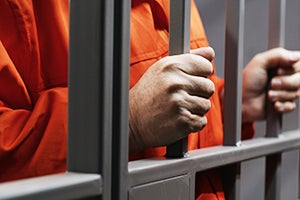
Felony probation often requires individuals to either serve time in county jail, complete community service, or both.
Although incarceration occurs when a jail term is imposed, the sentence remains technically probationary rather than custodial. It is important to note that imposing state prison rather than county jail as a condition of probation is impermissible.
Regarding community labor conditions, the defendant is required to perform strenuous work through a court-approved activity, usually involving CalTrans cleanup, graffiti removal, or beach cleanup.
In all felony probation cases, the defendant is required to pay restitution to the victim and mandatory court fines and fees.
If paying these fines and fees would cause financial hardship, the defendant may request that they be remitted in the form of additional community labor days.
However, victim restitution cannot be reduced or replaced and must always be paid as a condition of probation.
Felony probation generally restricts movement and travel. If the defendant wishes to relocate, they must seek court approval. For travel plans, consent from their probation officer is required.
Violating Felony Probation
If a defendant does not comply with felony probation conditions, particularly the requirement to stay arrest-free and obey all laws, they risk a probation violation.
The defendant has the right to contest a probation violation in a hearing before a judge. This evidentiary hearing allows the judge to hear live testimony, examine documents, and consider legal arguments from both the prosecutor and defense counsel.
Suppose a felony probationer breaches the terms of their probation, such as failing to stay arrest-free or obeying laws.
In that case, the consequences can be severe, as the judge has the authority to revoke probation and impose any sentence up to the maximum for the original felony. This could result in significant time in California state prison, underscoring the importance of compliance.
Reach Out to Our Law Firm for Assistance
Judges have the authority to reinstate or modify probation, which can give the audience confidence that there are opportunities for second chances within the legal process.
In these cases, successfully fulfilling all probation requirements may result in expungement, offering the individual the possibility of a fresh start.
Formal probation differs from summary probation in misdemeanor cases in that the defendant is directly supervised by the probation department and required to report periodically. Building a positive relationship with the probation officer is essential for completing probation.
If you or someone you know needs advice regarding a grant of formal or felony probation in a state court, contact our team of experienced California criminal defense attorneys for an initial consultation.
Cron, Israels & Stark is a leading criminal defense law firm staffed by experienced lawyers with many decades of combined expertise. Contact us to discuss your case.