
Losing track of your car after parking it can be a stressful experience. In California, Vehicle Code 22651 VC authorizes law enforcement to tow and impound vehicles in certain situations without prior notice.
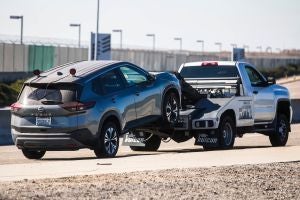
California law specifies when and where local law enforcement can legally tow and impound your vehicle. If your vehicle or situation meets the legal requirements, authorities may tow it without warning and store it in an impound lot.
You will need to pay the towing and storage fees before retrieving your vehicle. This law permits the towing and impoundment of vehicles if the driver commits a DUI, parks in a handicapped or bus zone, has five or more unpaid parking tickets, parks illegally on private property, or obstructs traffic.
Private property owners can legally call a tow truck to remove a vehicle from their property without notifying the owner or local authorities.
Simply put, VC 22651 states that a peace officer authorized to direct traffic or enforce parking laws in a city, county, or state agency jurisdiction where a vehicle is located can remove a vehicle under specific conditions.
These conditions include obstruction of traffic, hazardous parking, reported stolen vehicles, blocking a driveway, preventing access to firefighting equipment, or if the driver has been arrested, among others. Below is a summary of these rules.
When Can an Officer Tow and Impound My Vehicle?
VC 22651 outlines numerous situations where law enforcement can lawfully tow and impound your vehicle, including the following:
- Obstructing traffic: If you park or leave your car in a spot that blocks traffic or poses a safety risk, the police can have it towed.
- Blocking a driveway: If you park so that you block a private driveway, the police can tow your vehicle.
- Blocking a fire hydrant: Parking is generally not permitted in front of fire hydrants to ensure firefighters can access them. The police may tow a vehicle parked in front of a hydrant.
- Expired registration: If your vehicle registration has expired for more than six months, your license plates are missing, or your license or registration is nonexistent or considered fake, these are all reasons for towing and impounding the vehicle.
- Parking in handicapped spots: If you park in a disabled parking space identified by the blue wheelchair icon without the proper permit, the police might tow your vehicle to make the spot available for authorized drivers.
- Violating a 72-hour ordinance: Some municipalities have parking regulations that prohibit parking in the same spot for over 72 consecutive hours, which is equivalent to three full days. If you leave your car parked there for longer than this period, it may be towed without notice.
- Unlicensed drivers: If you're caught driving without a valid license or with a suspended or revoked license, an officer may immediately tow and impound your vehicle.
- Scene of an accident: If you're in a crash and too injured or unable to drive, police may tow your vehicle away from the scene.
- Five or more parking violations: If you accumulate five or more unpaid parking violations, law enforcement has the authority to tow and impound your vehicle to settle the fines.
- Getting arrested: If law enforcement pulls you over and arrests you, such as on suspicion of DUI, they will tow and impound your vehicle.
- Unlicensed car dealer: Any vehicle sold by an unlicensed dealer may be towed.
- Car accident: If the driver experienced hospitalization or a severe injury, they would be unable to operate their vehicle.
Vehicle Towed Over a Parking Violation
If you are illegally parked, law enforcement typically leaves a citation in a visible area of your vehicle, informing you of the amount owed and the payment process. However, there are some exceptions to this:
- If a visible warning is posted indicating that parking violators will be towed.
- If your vehicle is blocking traffic or posing a safety risk.
- If it has remained for over 72 hours in zones where the rule applies.
- If law enforcement finds out you have five or more unpaid parking tickets
Some parking spaces have posted signs warning about towing, and the parking ticket notes that police may call a tow company for repeat offenders. However, police will not notify drivers before towing the vehicle.
What Happens When My Vehicle is Towed?
Some parking areas or streets display signs warning about towing, and each parking ticket includes a notice that police are generally authorized to call a tow company for repeat offenders.
However, officers do not usually try to notify drivers before arranging for their vehicles to be impounded. If police decide to tow your vehicle, it will be taken to the local police or sheriff's department impound lot.
To find out its location, contact the local police. When picking up your vehicle, remember to bring your driver's license, proof of registration, proof of insurance, and payment for any towing or impound fees.
Non-registered owners can claim impounded cars, but they must have a written authorization letter from the owner. Before towing a vehicle for registration that has been outstanding for over six months, police must confirm that there is no current registration with the DMV.
How Much Does It Cost to Release an Impounded Vehicle?
Towing charges vary based on the impound location and can amount to hundreds or even thousands of dollars, especially if you don't pick up the car promptly. Impound lots generally accept cash, credit cards, and cashier's checks to cover the costs of towing and storage. You will need to pay the following fees:
- Towing and administrative fee
- Transfer charge fee
- Daily storage fee
- After-hours gate fee
- Lien fees
- Auction fee (if applicable)
Impound lots frequently sell unclaimed cars at a loss and then sue the owners for the remaining balance, known as the 'deficiency.' If the amount is significant, the case might be handled in small claims court.
How Much Time Do I Have To Reclaim My Vehicle?
Under California law, your vehicle can only be detained at the impound lot for up to 30 calendar days. If you do not claim it within this period, the police will sell it at auction.
Additionally, some lots impose daily fees, so delaying retrieval could increase your costs. To avoid these issues, it is advisable to reclaim your vehicle as soon as possible.
Towing charges vary based on the impound location. As noted, standard fees typically include the towing fee, daily storage fee, administrative fee, and transfer charge. Many impound lots sell unclaimed vehicles at auction.
For more information, contact our California criminal defense lawyers at Cron, Israels & Stark in Los Angeles, CA.
Related Content:
