
The disappearance of Nancy Guthrie has drawn national attention—not only because of the mystery itself, but because of the technological breakthrough that may help solve it.
A video recovered from a Nest doorbell camera revealed a masked and armed individual entering her home the night she disappeared.
The footage, retrieved by Google engineers after investigators believed it was permanently lost, has raised important questions about digital surveillance, data retention, and law enforcement access to private home recordings.
The Nancy Guthrie Case and Google's Data Recovery
Nancy Guthrie, the 84-year-old mother of Today Show host Savannah Guthrie, has been missing since February 1.
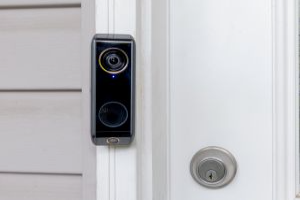
Investigators initially believed that footage from her Nest doorbell camera had been lost because no premium subscription was active.
Without paid cloud storage, Nest users typically only have access to live video and short-term event clips.
However, engineers at Google, which owns Nest, were able to recover video data after a complex, multi-day process.
The recovered footage reportedly shows a masked intruder entering her home on the night she disappeared.
This recovery may provide critical evidence in the investigation. But it also raises deeper questions.
How Nest Doorbells Store and Retain Video
Google's Nest doorbells retail for approximately $150 and offer:
-
Real-time video streaming
-
Motion and sound alerts
-
Cloud storage (with subscription)
Premium subscriptions, typically $10–$20 per month, allow long-term video storage and retrieval.
Without a subscription, users generally do not retain stored footage in the cloud—at least under standard consumer-facing terms.
The Guthrie case suggests that data may still exist in recoverable form under certain circumstances, even when consumers believe it has been deleted or was never stored long-term.
Ring and Law Enforcement Partnerships
Another major smart doorbell manufacturer, Ring (owned by Amazon), has faced years of scrutiny over law enforcement partnerships.
By 2023, more than 2,600 police departments had formal partnerships with Ring through its Neighbors app.
These partnerships allowed:
-
Police to view public posts
-
Law enforcement to request footage directly from users
-
Expanded neighborhood surveillance coordination
Civil liberties organizations have criticized this system as warrantless, networked surveillance that can fuel over-policing and racial bias.
The Axon Partnership and Expanding Access
In 2024, Ring announced it would sunset a feature that allowed police to request footage directly through its system.
However, in 2025, Ring reversed course and announced a partnership with Axon, the company known for body cameras and digital evidence platforms.
Under the updated system:
-
Police may request footage through Axon's digital evidence system
-
Ring is exploring opt-in livestreaming features
-
Users may share footage directly with law enforcement
Critics argue this continues to blur the line between voluntary cooperation and networked surveillance infrastructure.
What Is Warrantless Networked Surveillance?
Warrantless networked surveillance refers to the aggregation of privately owned camera systems into interconnected data networks that law enforcement can access—sometimes without a traditional warrant.
Concerns include:
-
Expansion of surveillance into private residential spaces
-
Data retention policies that are unclear or opaque
-
Secondary uses of footage beyond original intent
-
Increased targeting of over-policed communities
Civil liberties groups argue that these systems can amplify bias when surveillance disproportionately affects certain neighborhoods.
Why the Nancy Guthrie Case Matters
The Guthrie case demonstrates the dual nature of connected doorbells:
Public Safety Benefits
-
Evidence recovery in serious crimes
-
Faster suspect identification
-
Digital forensic breakthroughs
Privacy Risks
-
Always-on home recording
-
Cloud-stored footage in corporate data centers
-
Complex and unclear retention policies
-
Potential compelled disclosure to law enforcement
The uncomfortable reality is that these devices may retain or reconstruct more data than consumers understand.
Can Law Enforcement Access Doorbell Footage Without a Warrant?
It depends on:
-
The company's policies
-
Whether a user voluntarily shares footage
-
Exigent circumstances
-
Court orders or subpoenas
Historically, some tech companies have required formal legal process, while others have provided emergency disclosures in urgent situations.
The evolving partnerships between law enforcement and technology companies continue to reshape expectations of privacy.
How Consumers Can Reduce Surveillance Risks
Advocacy groups often recommend:
-
Disabling law enforcement integration features
-
Avoiding long-term cloud storage when possible
-
Reviewing data retention policies
-
Understanding opt-in livestreaming features
-
Considering local storage alternatives
Consumers often assume private home devices remain private—but network integration changes that reality.
Broader Implications for Digital Privacy
Smart doorbells have become normalized in residential neighborhoods.
Yet they represent:
-
A distributed surveillance network
-
Corporate-controlled data infrastructure
-
Law enforcement integration pipelines
-
Social shifts in expectations of privacy
As surveillance expands from public streets into private doorsteps, policymakers, courts, and consumers face difficult tradeoffs between safety and civil liberties.
Frequently Asked Questions
Can Google recover deleted Nest footage?
In rare cases, technical recovery may be possible depending on data architecture and timing. Consumers should not assume deleted footage is permanently unrecoverable.
Do doorbell cameras store video without a subscription?
Typically, cloud storage requires a subscription. However, system logs or cached data may exist temporarily.
Can police request Ring footage without a warrant?
Police may request footage from users voluntarily. In some cases, legal processes such as subpoenas or emergency requests may apply.
Are smart doorbells considered public or private surveillance?
They are privately owned devices, but when connected to cloud systems and shared with law enforcement, they function as part of broader surveillance networks.
The Larger Debate
The Nancy Guthrie case may ultimately help solve a serious crime. But it also underscores a broader issue:
Connected home devices create permanent, searchable records of domestic life.
As partnerships between technology companies and law enforcement deepen, society must grapple with how much surveillance is acceptable—and who controls the data captured at our front doors.
If you have a legal issue related to warrantless networked surveillance, the Los Angeles-based criminal defense attorneys at Cron, Israels & Stark are here to help.
Schedule your consultation using the contact form or call us at (424) 372-3112.
Related Content:
