
California enforces strict statutory operating boundaries on businesses that hold liquor licenses.
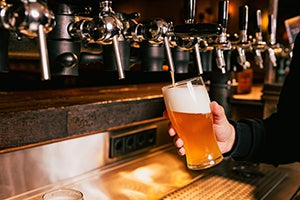
Under California Business & Professions Code § 25631 BPC, it is a criminal offense for licensed establishments or their employees to sell, give away, or deliver alcoholic beverages during late-night and early-morning hours.
Often called the "after-hours sales law," this statute strictly enforces the "last call" cutoff.
A single violation can jeopardize a business owner's livelihood, result in an administrative strike against a liquor license, and expose individual employees to criminal misdemeanor charges.
Cron, Israels & Stark can help you. Schedule your consultation today at (424) 372-3112 or use the contact form.
The Legal Threshold: Elements of the Crime
To secure a conviction under BPC § 25631, a California prosecutor must prove three key facts beyond a reasonable doubt.
-
Licensee Status: The defendant was either an on-sale licensee, such as a bar, nightclub, or restaurant, or an off-sale licensee, like a liquor store, grocery store, or gas station. Alternatively, they could have been acting as an authorized agent or employee of such a licensee.
-
The Action: The defendant either sold, gave away, or delivered an alcoholic beverage to another person, or a consumer knowingly bought an alcoholic beverage from a licensee.
-
The Prohibited Window: The transaction occurred precisely within the restricted time window of 2:00 a.m. to 6:00 a.m.
The Daylight Saving Time Trap: The statute clearly addresses seasonal time changes. When Pacific Standard Time switches to Pacific Daylight Time (or the other way around), "2:00 a.m." is legally set as exactly two hours after midnight. Turning back the clocks at the establishment does not give an additional hour for legal sales.
Criminal and Administrative Penalties
A violation of Business & Professions Code § 25631 is considered a criminal misdemeanor in California. Unlike minor infractions, a misdemeanor shows up on permanent criminal background checks.
Individual Criminal Penalties
If a bartender, cashier, manager, or business owner is convicted, they face the following:
-
Up to 6 months in a California county jail.
-
Court-ordered fines reaching a maximum of $1,000 (plus substantial court assessments).
Administrative Consequences for the Business
Beyond the criminal court proceedings, the California Department of Alcoholic Beverage Control (ABC) closely monitors these violations. Police departments regularly send arrest reports straight to the ABC.
A retail operation faces parallel administrative disciplinary actions that can financially devastate a business:
|
Violation Tier |
Typical ABC Administrative Action |
| First Offense | Formal warning letter or a multi-day suspension of the establishment's liquor license. |
| Repeated Violations | Extended, mandatory license suspensions or a complete revocation of the business's right to sell alcohol. |
| Monetary Alternatives | In select minor cases, the ABC may allow a licensee to pay a heavy "Offer in Compromise" fine in lieu of serving a suspension. |
Effective Legal Defense Strategies
Being accused by local police or an undercover ABC agent doesn't necessarily lead to a conviction. A skilled criminal defense attorney can develop a strong defense by examining the details of the encounter:
1. The Transaction Occurred Prior to 2:00 a.m.
Timing is. everything. If a bartender serves a final drink at 1:58 a.m., but police record patrons holding or consuming the drink at 2:05 a.m., there is no violation of BPC § 25631. The law prohibits selling, gifting, or delivering alcohol after hours, but it does not specifically criminalize a patron quietly finishing a legally purchased drink just a few minutes past 2:00 a.m.
2. Not Acting in a Licensee Capacity
The law is specifically designed for commercial distribution. For example, if a liquor store owner closes at 2:00 a.m., then later goes to a friend's house and gives them a bottle of alcohol at 3:00 a.m. as a social gesture, they are acting as a private individual, not a commercial seller. In this case, the state cannot penalize private, non-commercial sharing according to this law.
3. Lack of Constitutional Probable Cause
If local law enforcement enters a closed business without a warrant or detains an employee leaving the building without reasonable suspicion of criminal activity, any evidence collected—such as receipt logs, security footage, or undercover audio—may be excluded through a motion to suppress.
Related Statutes & Alcohol Offenses
Prosecutors often examine nearby parts of the Business & Professions Code when conducting an investigation into after-hours sales.
-
Permitting Consumption After Hours — BPC § 25632: It is a separate misdemeanor for an on-sale licensee to allow any individual to consume alcohol on their premises from 2:00 a.m. to 6:00 a.m., even if the purchase was made before 2:00 a.m.
-
Operating Without a Valid License — BPC § 23300: Selling alcohol outside regular or authorized hours without a valid, active ABC retail license transforms the issue into a distinct criminal commercial case.
-
Sales to Obviously Intoxicated Patrons — BPC § 25602: If an establishment conducts a flurry of "last call" transactions just before 2:00 a.m. and serves patrons showing obvious signs of severe intoxication, it could lead to separate misdemeanor charges.
Frequently Asked Questions
Can a customer be charged under BPC § 25631, or does it only apply to employees?
Both can be charged. The statute clearly states that "any person who knowingly purchases any alcoholic beverage" between 2:00 a.m. and 6:00 a.m. is subject to a misdemeanor. If you pressure a clerk to open the registers late, you face the same criminal penalties as the employee.
Does giving alcohol away for free after 2:00 a.m. bypass the law?
No. The law clearly forbids any licensee or employee from selling, distributing, or providing alcoholic beverages. Providing "complimentary" drinks, hosting an unlicensed after-hours open bar, or letting patrons pour their own drinks after 2:00 a.m. are direct violations.
What happens if an employee makes an unauthorized sale without the owner's knowledge?
The employee will be charged with a direct criminal misdemeanor. For the business owner, the law mostly functions under strict administrative liability. According to ABC regulations, a licensee must adequately train and supervise staff. Illegal actions by an employee on the premises are legally attributed to the business, so the owner's liquor license can be suspended or revoked even if they were at home asleep when the sale happened.
Protect Your License and Career: Consult a Defense Attorney
Whether you're a corporate retail chain, a local restaurant owner, or a hospitality worker trying to earn a livelihood, an after-hours alcohol allegation demands an immediate legal response.
Contact a dedicated California criminal defense attorney at Cron, Israels & Stark to craft a clear case strategy, safeguard your record, and keep your business operations secure.
