
In today's technological age, recordings are constantly made. People frequently have their phones out, capturing moments in their daily lives. It's become second nature for many to record in various situations.
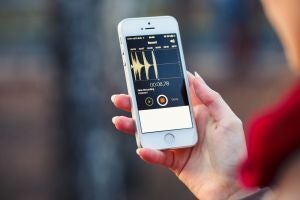
However, this tendency often causes issues as people may record conversations to have evidence of what was said. Still, when they bring these recordings to court, they might discover that the judge refuses to listen because the other party did not consent to being recorded.
California is a “two-party consent" state, which means all parties must agree to the recording.
It is generally illegal to record someone without their consent. If a recording is made without the other person's consent, it may not be admissible as evidence in court.
Moreover, breaching the state's “two-party consent” laws can result in criminal and civil penalties. Therefore, recording without permission can significantly impact can lead to serious legal consequences.
In other words, it is illegal for one person to record a conversation without the other person's knowledge or consent. Doing so can lead to a charge of eavesdropping under Penal Code 632 PC. However, an important exception exists: it is legal to make covert recordings solely to collect evidence for specific crimes. In fact, these recordings can be used as evidence to establish the commission of a crime.
What Does the Law Say?
California Penal Code 632(a) says, "A person who, intentionally and without the consent of all parties to a confidential communication, uses an electronic amplifying or recording device to eavesdrop upon or record the confidential communication, whether the communication is carried on among the parties in the presence of one another or by means of a telegraph, telephone, or other device, except a radio, shall be punished by a fine not exceeding two thousand five hundred dollars ($2,500) per violation, or imprisonment in a county jail not exceeding one year, or in the state prison, or by both that fine and imprisonment."
California Penal Code 633.5 PC says, "Sections 631, 632, 632.5, 632.6, and 632.7 do not prohibit one party to a confidential communication from recording the communication for the purpose of obtaining evidence reasonably believed to relate to the commission by another party to the communication of the crime of extortion, kidnapping, bribery, any felony involving violence against the person, including, human trafficking, as defined in Section 236.1, or a violation of Section 653m, or domestic violence as defined in Section 13700."
Key Takeaways
- Penal Code Section 633.5 permits a crime victim to record someone making threats of harm. For instance, if a divorce party threatens physical violence, such a recording is likely admissible in court. Conversely, if the statement only involves hiding assets without any physical threats, the recording would probably not qualify for this exception.
- In 1967, California lawmakers enacted what is known as the "Invasion of Privacy Act." This law establishes criminal penalties to prevent people from invading others' privacy. Certain types of eavesdropping are considered crimes, such as under Penal Code 632 PC.
- The rule covers "confidential communications” — conversations where one party reasonably expects no one is listening or overhearing.
- Recording includes any electronic device used to listen, record, or amplify communication, such as hidden cameras, cell phones, video cameras, and similar technology.
- The primary intent behind this law is that victims or potential victims of these crimes can gather evidence to get the perpetrator convicted without being prosecuted for eavesdropping themselves.
- Penal Code 633.5 specifically applies to private citizens and does not extend to peace officers or other law enforcement personnel.
- According to PC 633, these law enforcement officials already enjoy immunity from eavesdropping laws and are permitted to record private conversations when conducting lawful criminal investigations.
What are the Exceptions?
Penal Code 633.5 explicitly allows private citizens to record conversations without the other person's consent when the recording is intended to gather evidence of certain crimes.
- Kidnapping (Penal Code 207 PC)
- Extortion (Penal Code 518 PC)
- Bribery (Penal Code 67 PC)
- Human trafficking (Penal Code 236.1 PC)
- Annoying phone calls (Penal Code 653m PC)
- Any felony that involves violence against the individual recording, including domestic violence and PC 261 rape.
Penal Code 633.5 PC exempts the person making the recording from criminal charges if the recording is intended to gather evidence of the listed crimes. It also permits these recordings to be used as evidence in court when prosecuting the offender for any of these crimes. Other crimes related to Penal Code 633.5 PC for secret recordings include:
- Wiretapping (Penal Code 631 PC)
- Peeking while loitering (Penal Code 647i PC)
- Criminal invasion of privacy (Penal Code 47j PC)
Confidential Communications
The rule pertains to “confidential communications”—conversations where one party reasonably expects no one is listening or overhearing. A recording device is any electronic device used to listen to, record, or amplify communication, such as hidden cameras, cell phones, or video cameras.

Understanding the legalities surrounding this issue is crucial because recording without the other person's consent can sometimes be lawful, making the evidence admissible. This knowledge can empower you to make informed decisions in such situations.
For instance, recording someone unknowingly in a public or semi-public area, such as a street or restaurant, might be justified because the person might not have a reasonable expectation of privacy in such settings.
Each situation requires an analysis of its specific facts, and laws can vary from case to case. Therefore, do not assume the law doesn't apply just because you're in a public space.
Why You Need a Defense Lawyer
Given the complexity and potential legal consequences of California Penal Code 632 PC on eavesdropping and Penal Code 633.5 on secret recordings, it's crucial to seek the advice of our California criminal defense lawyers. We can provide the guidance you need and help you navigate these complex legal issues.

The laws regarding eavesdropping and secret recordings are often complicated and confusing. It is generally advisable not to record conversations without the other person's consent, as this may result in criminal or civil penalties. Additionally, you should be cautious not to make statements that could incriminate you.
Recording a confidential communication in California without the other party's consent is not only risky but often illegal. If you can't obtain their consent and your situation doesn't fall under a specific exception, consider alternative approaches to avoid potential legal consequences.
If you record confidential communication without consent, you may also be subject to civil penalties. Cal. Penal Code 637.2 permits a victim of eavesdropping to file a civil lawsuit against the eavesdropper and seek monetary damages. For more information and guidance, it's advisable to consult our California criminal defense lawyers at Cron, Israels & Stark in Los Angeles, CA.
Related Content:
