
Electronic monitoring in California—governed primarily by California Penal Code 1203.016 PC—is a court-approved jail alternative that allows qualifying defendants to serve custody sentences under house arrest instead of in county jail or state prison.
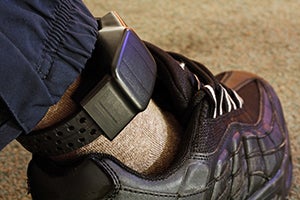
Designed to relieve jail overcrowding while maintaining public safety, electronic monitoring uses radio frequency (RF), cellular, or Global Positioning System (GPS) technology to continuously track an individual's location, movement, and curfew compliance.
Defendants placed on electronic monitoring are granted supervised freedom to live at home, maintain employment, attend medical appointments, and fulfill family responsibilities while remaining under strict judicial supervision.
Types of Electronic Monitoring Devices Used in California
Courts across Los Angeles County and throughout California utilize several specialized electronic monitoring systems depending on the nature of the offense and probation conditions:
-
GPS Location Trackers: Ankle bracelets that transmit real-time satellite data to a central monitoring agency, ensuring adherence to designated movement zones and court-ordered curfews.
-
SCRAM Continuous Alcohol Monitors: Secure Continuous Remote Alcohol Monitor (SCRAM) ankle bracelets that sample transdermal sweat every 30 minutes to ensure 100% alcohol sobriety—frequently ordered in repeat DUI cases.
-
Home Detention Units (RF/Cellular): Base stations installed in the home that sync with a wrist or ankle transmitter to verify when a defendant enters or leaves the residence.
-
PharmChek Drug Sweat Patches: Pharmaceutically applied skin patches replaced weekly to continuously test for illegal substances, including methamphetamine, cocaine, heroin, PCP, and marijuana.
Eligibility Criteria for California House Arrest Programs
Not every defendant qualifies for house arrest under Penal Code 1203.016 PC. Eligibility is determined by the court, county probation department, or sheriff's office based on specific statutory guidelines:
-
Non-Violent Offense: Charges must be non-violent, non-serious misdemeanors or eligible non-violent felonies under PC 1170(h).
-
Low Risk to Public Safety: The defendant must demonstrate low flight risk and pose no threat to the community or victims.
-
Suitable Residence: The defendant must maintain a stable home within the sentencing court's geographical jurisdiction equipped with reliable cellular or landline reception.
-
Agreement to Terms: The defendant must consent to unannounced home checks, continuous location tracking, and strict schedule adherence.
-
Ability to Pay Fee Scale: Program fees are charged on a sliding scale based on documented ability to pay under California law.
Statutory Exclusion: Individuals convicted of serious violent felonies, specific sex offenses requiring registration, or those serving state prison terms are generally barred from home confinement programs.
Program Conditions vs. Consequences of a Violation
|
Aspect |
Mandatory Program Conditions |
Penalties for Program Violation |
| Movement & Schedule | Strict curfews; pre-approved windows for work, school, and medical care | Immediate probation revocation hearing and arrest |
| Sobriety & Testing | Zero alcohol/drug consumption; random testing or SCRAM monitoring | Immediate remand to county jail custody |
| Supervision | Regular check-ins with probation officers or monitoring coordinators | Remainder of sentence served in physical custody |
| Equipment Care | No tampering, battery depletion, or removal attempts | Additional felony charges for equipment destruction (PC 594) |
Frequently Asked Questions (FAQs)
How much does house arrest cost per day in California?
Daily fees generally range from $10 to $35, plus a one-time setup fee. However, under California law, inability to pay cannot disqualify a defendant from entering the program; courts adjust or waive fees based on a financial assessment.
Can I leave my house for work while on electronic monitoring?
Yes. Courts routinely grant pre-approved movement windows for verifiable employment, job interviews, trade school classes, medical appointments, court appearances, and required counseling or rehab sessions.
Is electronic monitoring eligible for good conduct time credits?
Yes. Under California Penal Code 4019 PC, defendants serving county jail sentences on electronic monitoring earn standard conduct and work credits, allowing them to complete their sentences in half the calendar time if compliant.
What happens if the electronic monitoring battery dies or loses signal?
A dead battery or lost GPS signal generates an automated alert to the monitoring agency and probation officer. Unless immediately resolved or proven to be a technical glitch, signal loss is treated as an attempted escape or violation, leading to an arrest warrant.
Can you get house arrest for a felony charge in California?
Yes, for non-violent, non-serious felonies. Under California Penal Code 1170(h), qualifying non-violent felony sentences can be served via local probation, mandatory supervision, or electronic home detention rather than state prison.
Strategic Representation in Alternative Sentencing
Securing an electronic monitoring order requires proactive legal representation. Judges do not automatically grant home confinement; defense counsel must prepare a formal petition demonstrating program eligibility, stable housing, and verifiable employment or rehabilitation progress.
Facing Jail Time in Los Angeles or California?
If you or a loved one are facing criminal prosecution, keeping options open for house arrest is critical to protecting your job, family, and freedom.
Contact the Los Angeles criminal defense attorneys at Cron, Israels & Stark at (424) 372-3112 to evaluate your eligibility for electronic monitoring and build an effective alternative sentencing strategy.
