
Fingerprint evidence has several flaws, including poor-quality crime scene prints that are often partial or smudged, subjectivity in analysis caused by human error, and the absence of standardized scientific protocols for conclusively matching prints.
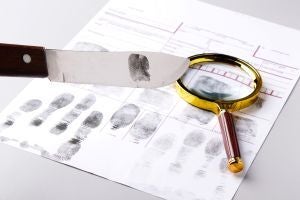
Additional concerns involve environmental damage to prints, the risk of bias, and questions regarding the uniqueness and permanence of fingerprints over time.
For many years, fingerprint evidence has been considered one of the most reliable methods for convicting offenders. Investigators and prosecutors have long relied on the principle that each fingerprint is unique, which makes it a reliable method for identifying suspects and linking them to crimes.
However, fingerprinting, like any evidence, is not foolproof. Errors can occur at multiple points in the fingerprint identification process, potentially impacting the fairness of your trial if you're facing criminal charges.
Fingerprint examiners often face subjective decisions when comparing partial or smudged prints, which may result in inconsistencies among different examiners analyzing the same print.
Bias can impact an examiner's judgment, especially when they receive contextual case details. This bias may result in misinterpreted prints and false identifications, underscoring the importance of objective, unbiased fingerprint analysis.
Key Takeaways
- Some issues with fingerprint evidence include subjective analysis, possible examiner bias, incomplete or low-quality prints at crime scenes, absence of standardized identification criteria, and challenges in matching partial prints.
- Crime scene prints may be incomplete, smudged, or contaminated, which can hinder accurate identification. Factors such as dirt, moisture, or grease can greatly impact the quality of a fingerprint found at a crime scene.
- Additionally, no universally accepted standard exists for the required number of "points of comparison" to identify a fingerprint. Research has demonstrated that different fingerprint examiners can arrive at varying conclusions when examining the same print.
- The accuracy of fingerprint analysis heavily depends on the skill and experience of the examiner. While automated fingerprint identification systems can enhance accuracy and decrease subjectivity, they are not infallible.
- Due to the potential for error, fingerprint evidence should be carefully evaluated and presented alongside other supporting evidence.
Let's assess the key vulnerabilities in fingerprint evidence.
Inconsistent Comparison Standards
Since fingerprinting has been used as evidence, a consistent standard for comparing data points has never been established. Unlike DNA profiling, which relies on standardized and scientifically validated methods, fingerprint comparison practices can differ widely across jurisdictions and even among individual analysts.
Fingerprint examiners identify matches by visually comparing a suspect's print with a print found at a crime scene, focusing on tiny ridge patterns and features. However, there is no standard consensus on the number of similarities needed to confirm a match.
One examiner might consider a partial print adequate evidence, while another might find it inconclusive. This inconsistency allows room for subjective interpretation, which undermines the reliability of fingerprint evidence.
Vulnerability to Human Error and Bias
Human error and cognitive bias consistently pose challenges in fingerprint analysis. Examiners can unintentionally misinterpret or overlook details in a print due to fatigue, distraction, or stress. These mistakes become more common when dealing with partial or unclear prints, where the line between a match and a mismatch can become ambiguous.
Similarly, if an analyst knows that a suspect has committed other crimes or if their assessments closely match investigators' expectations, this can unintentionally introduce bias into their judgments. Research indicates that when examiners are provided with background information about a suspect's criminal record, they are more prone to identify a match-even if no true match exists.
Another issue is the lack of a global standard for the number and quality of comparison points required for fingerprint pairs to achieve an identification. Consequently, one examiner might see four matching points and consider it sufficient, while another might think that four matches are not enough for a definitive conclusion.
Variations in fingerprint quality
This relates to variations in the clarity and distinctiveness of fingerprint images, which can impact identification accuracy.
The quality of fingerprints gathered at a crime scene significantly influences the accuracy of their analysis. While routine fingerprinting typically yields clear, complete prints, latent prints at crime scenes are often partial, smudged, or distorted.
Environmental conditions, such as moisture, heat, and surface texture, can further impair print quality. Additionally, even decent prints can exhibit discrepancies due to distortions caused by the angle of contact or the pressure applied by the finger.
There are also challenges in visualizing latent prints, which can depend on the material on which the fingerprint is located. For example, on metal surfaces like a bullet casing, human saliva and sweat might either interfere with or improve the visibility of the print, or may result in only a partial print.
Issues with Fingerprint Databases
Advancements in technology have facilitated the widespread adoption of the Automated Fingerprint Identification System (AFIS), enabling law enforcement agencies to search databases for potential matches. Although AFIS has simplified the identification process, it is still prone to errors. The system depends on algorithms that identify candidates by matching similarities to the crime scene print.
However, these algorithms are not foolproof and may produce false positives, particularly with low-quality prints. Moreover, errors in data entry can happen if fingerprints are logged incorrectly into the system. If a suspect's records are mislabeled or inaccurately digitized, it could lead to an unfair association with a criminal investigation.
Theft and Hacking of Fingerprint Data
Modern technology has raised a new concern regarding fingerprint evidence: the risk of fingerprint theft and hacking. Advanced tools enable cybercriminals to extract fingerprints from common surfaces or to breach databases containing biometric information. Once stolen, fingerprints can be duplicated to implicate someone falsely.
This risk highlights the ongoing uncertainty surrounding fingerprint evidence, particularly when it's unclear whether prints at a crime scene were intentionally placed, accidentally deposited, or intentionally left.
How to Contest Fingerprint Evidence
Considering the vulnerabilities discussed earlier, fingerprint evidence may not be as definitive as it appears. A competent California criminal defense attorney can systematically question the validity of this evidence through multiple approaches.
- Your attorney might review the fingerprint analysis techniques to identify any inconsistencies, lack of standard procedures, or potential human errors.
- They might question the reliability of the fingerprints, claiming that smudged or incomplete prints do not reliably confirm a match.
- They could ask for detailed information about the AFIS database search to identify possible flaws or errors in the system.
- Independent forensic specialists can present expert testimony to challenge the prosecution's conclusions.
By emphasizing the subjective and error-prone nature of fingerprint evidence, your lawyer can assist in creating reasonable doubt in the jury's mind. For more information, contact Cron, Israels & Stark, a criminal defense law firm based in Los Angeles, California.
Related Content:
