
Title 49 U.S. Code § 32703 bans tampering with a vehicle's odometer, including disconnection, resetting, or altering it with fraudulent intent. It is also illegal to drive a vehicle on public roads if the odometer is disconnected or not working.
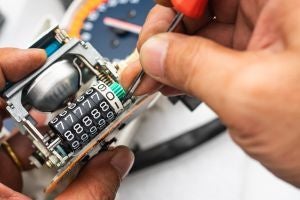
Additionally, it is prohibited to advertise, sell, or install devices designed to manipulate the odometer's mileage.
Simply put, the prohibited actions include tampering with the odometer—such as disconnecting, resetting, or altering it—to change the mileage with fraudulent intent.
It is also illegal to operate a vehicle with a tampered odometer or to drive on public streets or highways when the odometer is tampered with or is malfunctioning.
This federal law also bans the sale or installation of devices intended to alter odometer readings, as well as conspiring with others to violate any part of this section or related sections (32704 or 32705).
The Truth in Mileage Act was created to stop odometer fraud, which involves sellers changing a vehicle's mileage to make it look newer and more valuable. This dishonest practice can cause buyers to pay too much and remain unaware of the vehicle's actual condition.
Key Takeaways
- Under U.S. federal law, a vehicle's odometer must accurately show the miles driven for consumer protection.
- Odometer fraud—altering or misrepresenting a vehicle's mileage—is a federal crime under Title 49 U.S. Code 32703.
- If you tamper with an odometer to change or lower the mileage it shows, you commit a federal crime.
- Odometer fraud has serious consequences for both consumers and the motor vehicle industry.
- Buyers often suffer the most, unknowingly acquiring vehicles with much higher mileage than shown, which can result in unexpected repair and maintenance expenses.
- This law safeguards consumers against deceptive sellers who alter odometer readings to increase the value of used vehicles, providing a safety net for buyers in the used car market.
- If you're found guilty of unlawfully tampering with a vehicle's odometer, you could be subject to substantial civil penalties, criminal fines, and possibly imprisonment.
What is the Content of Section 32703?
49 U.S.C. 32703, preventing tampering, says, "A person may not (1) advertise for sale, sell, use, install, or have installed a device that makes an odometer of a motor vehicle register a mileage different from the mileage the vehicle was driven, as registered by the odometer within the designed tolerance of the manufacturer of the odometer;
(2) disconnect, reset, alter, or have disconnected, reset, or altered an odometer of a motor vehicle, intending to change the mileage registered by the odometer;
(3) with intent to defraud, operate a motor vehicle on a street, road, or highway if the person knows that the odometer of the vehicle is disconnected or not operating; or
(4) conspire to violate this section or section 32704 or 32705 of this title."
Which Acts Are Forbidden?
Title 49 U.S.C. 32703 makes it a federal crime to do any of the following acts:
- Installing, using, selling, or advertising any device that alters a vehicle's odometer to display a different mileage than the actual miles driven.
- Disconnect, reset, or otherwise modify an odometer with the goal of changing the registered mileage, or
- Operate a motor vehicle intentionally when the odometer is disconnected or not working, to commit fraud.
Conspiring to tamper with an odometer carries the same legal penalty as actually tampering with an odometer. In essence, if you plan and take steps to tamper with an odometer, you can be charged under 49 U.S.C. 32703 regardless of whether you complete the tampering.
Penalties under this law can add up, meaning you may receive a separate fine for each instance of odometer tampering. For example, if you alter the odometer readings on 20 cars, you could be fined 20 times.
Notably, individuals who tamper with or roll back odometers often also modify or forge titles and other documents that include the vehicle's mileage details. Making false claims about a vehicle's mileage is a distinct federal offense and is often charged alongside odometer tampering.
What Are the Related Offenses?
49 U.S. Code Chapter 327 Odometers has numerous federal laws that are related to 49 U.S.C. 32703, preventing tampering, including the following:
- 49 U.S.C. 32701 - Findings and purposes
- 49 U.S.C. 32702 - Definitions
- 49 U.S.C. 32704 - Service, repair, and replacement
- 49 U.S.C. 32705 - Disclosure requirements on transfer of motor vehicles
- 49 U.S.C. 32706 - Inspections, investigations, and records
- 49 U.S.C. 32707 - Administrative warrants
- 49 U.S.C. 32708 - Confidentiality of information
- 49 U.S.C. 32709 - Penalties and enforcement
- 49 U.S.C. 32710 - Civil actions by private persons
- 49 U.S.C. 32711 - Relationship to state law.
Penalties for Tampering with Odometers
Penalties for violating Title 49 U.S. Code 32703 and related odometer violations are detailed in 49 U.S.C. 32709. These strict rules emphasize how seriously the federal government views odometer fraud.
- Civil Penalties: Conviction for odometer tampering can result in a civil penalty of up to $10,000 per vehicle altered, with a maximum total penalty of $1 million. If a corporation commits the offense, all officers involved can also face individual fines, and the corporation itself may be penalized. The offender might face lawsuits from the Attorney General and the state government where the fraud took place.
- Criminal Penalties: A conviction for odometer tampering can result in fines reaching up to $250,000 (in addition to the civil penalties mentioned earlier) and may also lead to a prison sentence of up to 3 years in federal prison.
What Are the Defenses Available?
If you're charged with violating 49 U.S.C. 32703 for odometer tampering, a skilled federal criminal defense lawyer might use various strategies to challenge the charges. One possible approach is arguing that there was no intent to defraud.
Prosecutors must prove willful intent to secure a conviction. If your attorney can demonstrate that you lacked this intent—for instance, if the odometer was altered during a repair and you gave the buyer documentation showing the original mileage—the charges could be dropped.
We might claim it was an innocent mistake. We could argue that the odometer discrepancy resulted from a genuine error, like a mechanical fault, rather than intentional fraud. Alternatively, we may assert that the discrepancy was unintentional, with your attorney suggesting that factors such as tire replacement or mechanical problems caused the difference in the odometer reading rather than deliberate manipulation.
For more information, contact our federal criminal defense law firm, Cron, Israels & Stark in Los Angeles, CA.
Related Content:
