
Polygraph tests, or lie detector tests, have been employed in criminal investigations since the early 20th century.
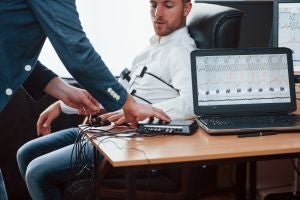
They assess physiological responses, such as heart rate, blood pressure, and perspiration, to determine whether someone is truthful or deceptive during interrogation.
Legal experts and psychologists have debated the accuracy and reliability of polygraph testing for many years.
Consequently, although polygraphs continue to be employed in criminal investigations and court cases, California law limits their use in court proceedings.
In other words, a polygraph test can be admitted into evidence in court only if all parties agree to its admission.
Police cannot compel a suspect or witness to undergo a polygraph. A polygraph test involves an examiner questioning the individual to assess honesty. This test is commonly administered to defendants and witnesses in criminal cases.
What is a Polygraph Test?
A polygraph is an electronic device designed to measure your biological responses while answering the examiner's questions. In theory, these responses reveal whether you are telling the truth or lying.
Many studies indicate that lie detector tests are not consistently reliable, which is why polygraph results are only admissible in a jury trial if both the defense lawyer and the prosecutor agree to their use.
Most California criminal defense attorneys will advise their clients to avoid taking a police polygraph without legal guidance. However, in some cases, you might opt for a private polygraph test to demonstrate your innocence. Let's explore this topic further below.
Admissibility of Polygraph Test Results
In California, as noted above, polygraph test results are generally not allowed as evidence in criminal trials. The exception is when both the prosecution and defense consent to present the test results to the judge or jury.
Additionally, an agreement needs to be reached before the following can be presented as evidence in court:
- That you were offered the opportunity to take a polygraph,
- You underwent a polygraph test.
- That you declined to take a polygraph test.
- That you did not pass the polygraph test,
- A polygraph examiner's perspective.
In addition, the law protects your right to refuse to submit to a polygraph test by law enforcement or prosecutors.
Courts generally exclude lie detector test results from evidence unless both parties explicitly agree, primarily because of the tests' unreliability and the need to safeguard the defendant's rights.
Polygraph Tests Are Not Completely Reliable
Polygraph tests are not entirely reliable and can produce false positives or negatives. Here are some reasons why this occurs:
- Subjectivity: The interpretation of polygraph results mainly relies on the examiner's subjective analysis of the physiological responses recorded during the test. Different examiners may reach different conclusions from the same data, leading to inconsistencies in assessing truthfulness or deception.
- False positives: Polygraph tests may yield false positives, wrongly indicating honest individuals as deceptive. This can occur because of factors like nervousness, anxiety, fear, or other emotional responses unrelated to lying.
- False negatives: On the other hand, polygraph tests can yield false negatives. People with experience in deception or sociopathic traits might control their physiological responses or employ countermeasures to manipulate the results, effectively "beating" the polygraph.
Violations of Your Constitutional Rights
As a defendant in a criminal case, you are protected by key rights under the United States Constitution. These rights include the right to remain silent (Fifth Amendment) and the right to have an attorney (Sixth Amendment).
Administering a polygraph test does not automatically protect these rights. During the examination, the examiner might ask questions that could potentially incriminate you.
You have the right to remain silent and not answer these questions. However, refusing to respond might affect the test results and lead the examiner to believe you are being deceptive.
Additionally, although you are entitled to have an attorney present during interrogations, your attorney can only effectively assist you or intervene during polygraph tests if the examination solely tracks your responses.
How Polygraphs Are Used in Criminal Cases
While polygraphs are generally limited in admissibility during trials, they may still be used if the party being questioned consents, in the following ways:
- Plea negotiations: Polygraph results can be utilized during negotiations between the prosecution and defense to assess the credibility of a defendant's statements or to help facilitate a plea agreement.
- Pretrial hearings: With mutual consent, polygraph test results may be used as evidence in pretrial hearings to determine the admissibility of other evidence or to evaluate witnesses' credibility.
- Witnesses: During vetting, both prosecution and defense might request potential witnesses to undergo lie detector tests to assess their suitability as witnesses.
- Private polygraph: You can arrange your own lie detector test and submit it as proof of your innocence. This is frequently used to try to have charges dismissed before the trial.
- Parole hearings: In certain cases, parole boards might take polygraph test results into account when determining an inmate's eligibility for parole, especially when evaluating their honesty regarding rehabilitation efforts or remorse.
- Sex offender registration: Polygraph tests can be employed to ensure that convicted sex offenders adhere to registration requirements and treatment programs during their post-conviction supervision.
- Investigations: Though not admissible as evidence in court, law enforcement agencies can employ polygraph tests during criminal investigations to gather information, confirm suspects' statements, or reduce the pool of potential suspects.
Why You Need a Criminal Defense Lawyer
Keep in mind that if police request a polygraph test, you have the right to refuse. In many cases, it's usually not advisable to take one. While the results themselves generally can't be used in court, anything you say during the test could still be used against you in legal proceedings.
As mentioned, you can undergo a private polygraph to demonstrate your innocence. This involves a lie detector test administered by a private examiner. Defendants or witnesses can use it in criminal cases.
The test is called "private" because you are not required to inform prosecutors or law enforcement about it. If the private test results are positive, you may share them with the prosecutor to try to get the charges dropped.
If the results are negative, keep them confidential. Always consult an experienced California criminal defense lawyer before taking a polygraph. You can contact us by phone or use the contact form to discuss your case. Cron, Israels & Stark is based in Los Angeles, CA.
Related Content:
