
California Penal Code 13730 PC - Domestic Violence Police Reports and Records Explained
Under California Penal Code 13730 PC, all local law enforcement agencies across California must establish detailed record-keeping procedures for domestic violence incidents and calls for assistance.
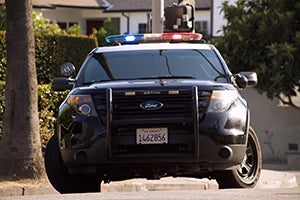
Rather than defining a standalone criminal offense that a person is charged with committing, PC 13730 mandates how police departments and sheriff's offices handle, document, compile, and report domestic violence incidents—including tracking DV firearm involvement, weapon usage, and prior domestic violence calls to the same address or involving the same parties.
Because domestic violence police reports compiled under Penal Code 13730 PC are routinely utilized by prosecutors, judges, and probation officers during charging decisions, bail hearings, and trial proceedings, understanding how these law enforcement records are generated and maintained is crucial if you are involved in a domestic disturbance investigation in California.
What Is the Statutory Language of PC 13730?
California Penal Code Section 13730 PC establishes explicit administrative requirements for law enforcement agencies regarding domestic violence record management and reporting:
(a) Each law enforcement agency shall develop a system, by January 1, 1986, for recording all domestic violence-related calls for assistance made with the department, including whether weapons were involved. All domestic violence-related calls for assistance shall be supported with a written incident report, whether or not an arrest is made.
(b) Each law enforcement agency shall compile a monthly summary of the domestic violence-related calls received stating the number of domestic violence calls received and the total number of lethal weapons, firearms, or other deadly weapons involved of each type...
(c) Each law enforcement agency shall maintain a system for identifying all domestic violence-related calls including recall calls to the same address or involving the same parties.
What Information Must Police Include in PC 13730 Incident Reports?
Under Penal Code 13730(a) PC, law enforcement officers responding to any domestic violence call for assistance are legally mandated to generate a written incident report—regardless of whether an arrest occurs.
The mandatory contents required in every PC 13730 domestic violence report include:
-
Identifying Information and Relationships: The names, contact details, and specific intimate partner relationship of all involved parties, as well as notations regarding any minor children present during the incident.
-
Presence and Type of Weapons: A specific inquiry and documentation detailing whether firearms, knives, blunt objects, or other lethal weapons were present, displayed, used, or seized by law enforcement.
-
Prior Call History (Recall Calls): Cross-referenced law enforcement agency records showing previous domestic disturbance dispatches to the same physical address or involving the same individuals.
-
Physical Evidence and Injuries: Detailed officer notes and photographic documentation recording visible scratches, bruises, torn clothing, broken household items, or damaged communication lines (PC 591).
-
Officer Observations and Statements: Recorded statements from the caller, alleged victim, suspect, and third-party witnesses, along with notes on emotional demeanor, visible distress, or alcohol and substance intoxication.
How Are PC 13730 Police Reports Used by Prosecutors and Courts?
Although PC 13730 is an administrative mandate for law enforcement agencies, the police reports created under this statute serve as central evidence in California criminal proceedings:
1. Prosecutorial Charging Decisions
District Attorneys and City Attorneys review PC 13730 police reports when deciding whether to file formal charges such as Domestic Battery (PC 243(e)(1)), Corporal Injury to an Intimate Partner (PC 273.5), or Criminal Threats (PC 422).
Even if the alleged victim requests that no charges be filed or later recants their initial statement, prosecutors routinely rely on the detailed officer observations documented in the PC 13730 report to proceed with prosecution.
2. Setting Bail and Pretrial Conditions
Judges review prior incident reports compiled under PC 13730(c) during initial arraignments to evaluate flight risk and public safety. A history of multiple "recall calls" or documented weapon involvement can lead to higher bail, Emergency Protective Orders (EPOs), or supervised pretrial release conditions.
3. Trial Evidence and Hearsay Exceptions
While police reports themselves are generally considered hearsay under the California Evidence Code, specific statements recorded within a PC 13730 report—such as spontaneously uttered statements during a 911 call or initial officer interview—may be admissible at trial under exceptions to the hearsay rule (e.g., spontaneous statements under Evidence Code 1240 or past recollection recorded under Evidence Code 1237).
How Can Defense Attorneys Challenge Errors in PC 13730 Reports?
Law enforcement officers responding to domestic disturbance calls often operate in high-stress, rapidly evolving environments. As a result, PC 13730 incident reports frequently contain factual inaccuracies, one-sided narratives, or exaggerated claims.
A skilled California criminal defense lawyer can challenge these records through several strategic methods:
-
Subpoenaing Body-Worn Camera (BWC) Footage: Cross-referencing written officer reports against actual bodycam and dashcam audio/video footage to expose discrepancies, missing context, or false police statements.
-
Obtaining 911 Audio Logs and Dispatch Records: Analyzing initial 911 recordings to verify whether the caller's tone and initial claims match the narrative written in the officer's report.
-
Highlighting Factual Omissions: Showing that responding officers failed to interview key third-party witnesses, ignored injuries on the accused (and thus failed to identify the primary aggressor), or misidentified items as "weapons."
-
Impeaching Witness Credibility: Using prior inconsistent statements recorded in PC 13730 reports to cross-examine prosecution witnesses during preliminary hearings or trial.
Hypothetical Example of a PC 13730 Police Records Case
To understand how Penal Code 13730 PC records impact a criminal defense case, consider the following scenario:
Scenario: Police respond to a noisy argument at an apartment in Los Angeles. Upon arrival, officers complete a mandatory PC 13730 incident report stating that Jordan committed felony domestic battery against a live-in partner. In the report, the officer notes that Jordan "threatened the victim with a dangerous weapon" after spotting a kitchen knife on the counter. The report also incorrectly logs a previous noise complaint from two years prior as a "prior domestic violence call." Based on this report, prosecutors file felony charges under PC 273.5 with a weapons enhancement.
Legal Outcome: Jordan retains a criminal defense attorney who subpoenas the officer's bodycam footage and dispatch history under PC 13730(c). The video shows the kitchen knife on a drying rack across the room and that it was never touched or mentioned during the argument. Dispatch records also show the prior call was a noise complaint about a loud television involving previous tenants. Because of these demonstrable errors in the PC 13730 record, prosecutors dropped the felony charges and weapons enhancement, resolving the matter as a minor infraction.
What Other California Laws Are Related to PC 13730?
Understanding related statutes is important because PC 13730 records directly interface with substantive domestic violence offenses and criminal procedure statutes across California.
-
California Penal Code 13700 PC (Domestic Violence Definitions): Provides the master statutory definitions of "abuse," "cohabitant," "domestic violence," and "victim" used in all PC 13730 police reports.
-
California Penal Code 273.5 PC (Corporal Injury to Spouse/Cohabitant): Makes it a wobbler offense to willfully inflict a traumatic injury on a current or former intimate partner.
-
California Penal Code 243(e)(1) PC (Domestic Battery): Criminalizes unlawful physical force used against an intimate partner, even when no visible injury occurs.
-
California Penal Code 273.6 PC (Violation of Protective Orders): Prohibits violating court-issued domestic violence restraining orders or Emergency Protective Orders.
-
California Penal Code 836(d) PC (Warrantless Domestic Violence Arrests): Authorizes law enforcement officers to make warrantless arrests in domestic violence cases based on probable cause established in PC 13730 reports.
-
California Family Code 6200 et seq. (Domestic Violence Prevention Act): Governs civil domestic violence restraining orders (DVROs), which heavily rely on PC 13730 police incident reports as supporting evidence.
Frequently Asked Questions (FAQs)
Do California police have to write a report if no one is arrested for domestic violence?
Yes. Under California Penal Code 13730(a), law enforcement officers must complete a written incident report for every domestic violence call for assistance they respond to, regardless of whether they make an arrest or file charges.
Are domestic violence police reports public records in California?
Generally, no. Under California Government Code 7923.600 et seq. (formerly Government Code 6254), police incident reports containing personal identifying details, investigative notes, and victim statements are exempt from general public disclosure. However, involved parties and their legal counsel can request copies through formal legal processes.
Can an alleged victim get a copy of a PC 13730 domestic violence police report?
Yes. Under California Family Code 6228, victims of domestic violence, human trafficking, or sexual assault have a statutory right to obtain a free copy of the police incident report from the law enforcement agency within specified timeframes (typically within 5 to 14 business days of the request).
What is a "recall call" under Penal Code 13730 PC?
A "recall call" refers to a repeat domestic violence call for law enforcement assistance made to an address or involving individuals who have a documented history of prior domestic disturbance calls. PC 13730(c) requires law enforcement agencies to maintain a system to track these repeat calls.
Can a PC 13730 police report be used against me if the victim refuses to testify?
Yes. Prosecutors frequently attempt to proceed with "victimless" domestic violence prosecutions by using the responding officer's statements, photographs of physical evidence, 911 audio recordings, and hearsay exceptions for statements recorded in the PC 13730 police report.
How long do law enforcement agencies keep PC 13730 domestic violence reports?
Retention periods vary by agency and county, but most California law enforcement departments maintain domestic violence incident reports, CAD (Computer-Aided Dispatch) logs, and 911 recordings for several years—and permanently in cases involving felony convictions or severe violence.
Speak to a DV Defense Lawyer for Help
When law enforcement responds to a domestic disturbance call, the resulting Penal Code 13730 PC incident report creates an official record prosecutors use to decide whether to file formal criminal charges.
An inaccurate, biased, or incomplete police report can mean the difference between a case being rejected or facing serious felony prosecution.
Our Legal Defense Strategy
-
Obtaining & Reviewing Law Enforcement Records: We secure complete copies of all PC 13730 police reports, CAD dispatch logs, 911 recordings, and officer bodycam footage to evaluate the accuracy of the prosecution's evidence.
-
Exposing Report Inaccuracies: Our legal team conducts independent investigations, interviews witnesses, and gathers physical or digital evidence to counter false or exaggerated claims written in police reports.
-
Pre-Filing Intervention with Prosecutors: We present mitigating evidence and objective facts to prosecutors before formal filing dates to push for charge reductions or case dismissal.
-
Dedicated Court Advocacy: Whether contesting bail, challenging protective orders, or fighting criminal charges at trial, we provide aggressive representation across California courts.
If you or a loved one is involved in a domestic violence investigation in California, take action immediately to protect your record and constitutional rights.
Contact an experienced California criminal defense attorney at Cron, Israels & Stark today to schedule a confidential consultation to review your options and build your defense.